Mandrini a comando per la tornitura di produzione: attuazione idraulica vs pneumatica, forza di presa in rotazione e sicurezza delle ganasce. BQUQ lavora mandrini a comando con precisione classe 0,005 mm.
Mandrini Autocentranti a Comando: Presa Idraulica e Pneumatica per la Tornitura di Produzione
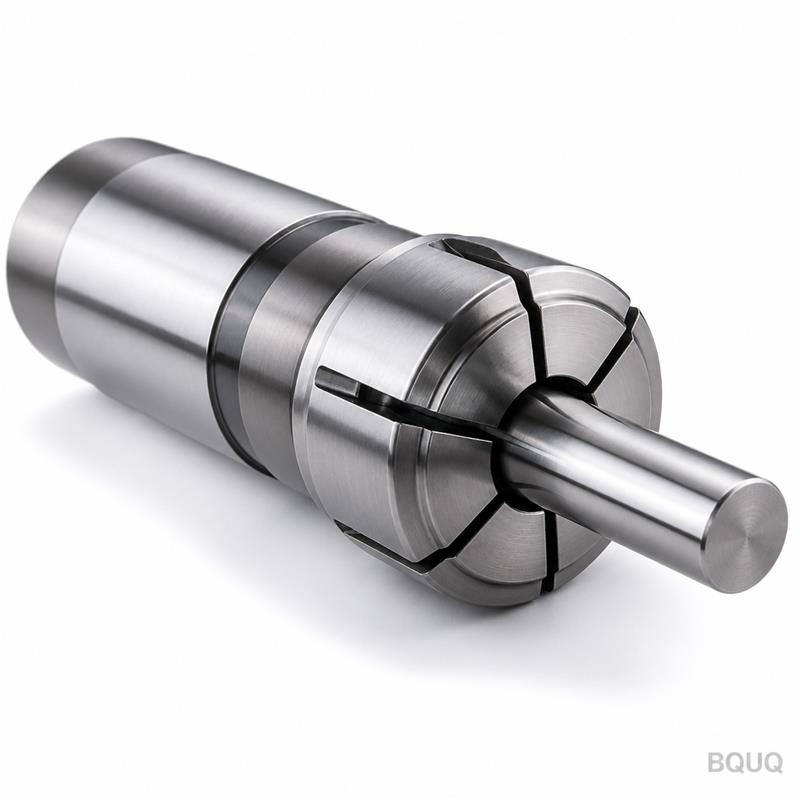
Un mandrino a comando è un mandrino autocentrante che si apre e si chiude sotto pressione idraulica o pneumatica invece che manualmente, garantendo a un tornio di produzione cambi pezzo rapidi e ripetibili con una forza di presa impostata dall'operatore piuttosto che dalla forza del braccio. L'attuazione idraulica porta la forza; l'attuazione pneumatica porta la velocità; entrambe esistono perché il serraggio manuale è il collo di bottiglia che nessuno mette a budget.
Su un tornio manuale il mandrino è un accessorio. Su un tornio di produzione il mandrino è un meccanismo: cicla migliaia di volte per turno, deve afferrare con una forza ripetibile e non deve mollare la presa quando la velocità del mandrino e le forze di taglio lo contrastano. I mandrini a comando automatizzano questo ciclo. Questa guida copre come funzionano, la scelta tra idraulico e pneumatico e la fisica della forza di presa che determina se i vostri pezzi restano al loro posto.
Anatomia di un Mandrino a Comando
Un sistema di mandrino a comando ha quattro parti. Il corpo del mandrino si monta sulla testa del mandrino. All'interno, un meccanismo — solitamente un collegamento a cuneo o a leva — converte il movimento assiale in movimento radiale delle ganasce. L'attuatore è un cilindro idraulico o pneumatico montato dietro il mandrino, collegato da un tubo di trazione attraverso il foro del mandrino. E le ganasce, tipicamente tre, portano ganasce superiori temprate o ganasce morbide lavorabili che toccano effettivamente il pezzo.
Il meccanismo è importante perché definisce la personalità del mandrino. I mandrini a cuneo sono lo standard di produzione: rigidi, precisi e la loro forza di presa può essere regolata controllando la pressione. I mandrini a leva mantengono meglio la forza in rotazione in alcuni progetti perché la geometria del collegamento compensa gli effetti centrifughi. I mandrini a spirale sono l'antenato manuale. Per il lavoro su barra, un mandrino passante consente al materiale di passare attraverso il mandrino; per i pezzi grezzi, un centro chiuso offre maggiore rigidità.
| Tipo di mandrino | Attuazione | Punti di forza tipici | Limiti tipici |
|---|---|---|---|
| Mandrino a comando a cuneo | Idraulica o pneumatica | Rigido, preciso, forza regolabile | Corsa ganasce limitata per dimensione |
| Mandrino a comando a leva | Idraulica | Buona ritenzione della forza in rotazione | Più componenti, costo maggiore |
| Mandrino a spirale | Manuale (esistono versioni a comando) | Costo contenuto, ampia corsa ganasce | Più lento, forza meno ripetibile |
| Mandrino a comando passante | Idraulica/pneumatica | Lavoro su barra e pezzi singoli su un solo mandrino | Forza ganasce inferiore rispetto al centro chiuso |
Idraulico vs Pneumatico: Il Vero Compromesso
I mandrini pneumatici sono più economici e più veloci nel ciclo: l'aria compressa di officina è ovunque e un cilindro pneumatico scorre rapidamente. Ma l'aria è comprimibile, quindi la presa pneumatica è più morbida e la forza diminuisce se il sistema perde o il compressore cala. I mandrini idraulici costano di più e richiedono una pompa e un serbatoio, ma l'olio è quasi incomprimibile: la presa è rigida, la forza è ripetibile e la stessa dimensione di mandrino può fornire una forza alle ganasce sostanzialmente superiore. La scelta segue il pezzo: le leghe leggere e i pezzi delicati funzionano bene con il pneumatico; l'acciaio e la sgrossatura aggressiva vogliono l'idraulico.
| Fattore | Pneumatico | Idraulico |
|---|---|---|
| Alimentazione tipica | Aria di officina, 6–8 bar | Olio, fino a ~70 bar tipico |
| Rigidità della presa | Morbida (l'aria si comprime) | Rigida (l'olio è quasi incomprimibile) |
| Velocità di ciclo | Veloce | Leggermente più lenta ma regolabile |
| Gamma tipica di forza di presa (mandrino da 6 pollici, tipico) | ~5–15 kN | ~20–50 kN |
| Costo e manutenzione | Basso | Più alto, sistema oleodinamico da mantenere |
I valori di forza sono gamme tipiche da catalogo per un mandrino di medie dimensioni e variano con pressione, peso e design delle ganasce. Lo schema da ricordare: il pneumatico vince su velocità e prezzo per lavori leggeri; l'idraulico vince ovunque la rigidità e la forza di presa decidano il taglio.
Forza di Presa in Rotazione: La Fisica a Cui Nessuno Sfugge
Ecco il numero che sorprende i nuovi operatori: la forza di presa di un mandrino a riposo non è la sua forza di presa a 4.000 giri/min. Le ganasce sono masse su un supporto rotante e la forza centrifuga tende a spingerle verso l'esterno, opponendosi alla presa. Più grandi e pesanti sono le ganasce — specialmente quelle morbide — più forza si perde all'aumentare della velocità. Un mandrino valutato per la piena forza a riposo può perdere un terzo o più di quella forza ad alta velocità con ganasce pesanti.
| Velocità del mandrino | Forza di presa tipica mantenuta (illustrativo) |
|---|---|
| 0 giri/min (valutazione statica) | 100% |
| ~2.000 giri/min, ganasce leggere | ~90–100% |
| ~4.000 giri/min, ganasce leggere | ~70–85% |
| ~4.000 giri/min, ganasce morbide pesanti | ~50–70% |
Questi sono schemi di ritenzione illustrativi, non una curva universale — ogni produttore di mandrini pubblica un grafico forza di presa-velocità per il proprio modello e set di ganasce, e dovreste diffidare di qualsiasi fornitore che non possa mostrarne uno. Le regole operative: lavorare le ganasce morbide in modo leggero, aggiungere un fattore di sicurezza alla forza di presa per la sgrossatura pesante e non assumere mai che la valutazione statica si applichi alla vostra velocità massima.
Ganasce, Sicurezza e Manutenzione
Le ganasce superiori seguono due filosofie. Le ganasce superiori temprate con inserti seghettati o a tortina sono per lavori ripetitivi a diametri fissi. Le ganasce morbide lavorabili vengono alesate o tornite sul contorno esatto del pezzo, distribuendo la presa su un'area maggiore — la soluzione giusta per pezzi a parete sottile, forme particolari e lavori in cui non è accettabile segnare il pezzo. Qualunque sia la ganascia, la linea di presa dovrebbe essere il più bassa possibile per ridurre la flessione sul pezzo e la forza di presa dovrebbe essere impostata per il pezzo, non per il massimo del mandrino.
La sicurezza su un mandrino a comando non è opzionale: la perdita di pressione deve far chiudere il mandrino o essere interbloccata contro l'avvio del mandrino, la corsa del tubo di trazione deve essere verificata prima della chiusura della porta e la forza di presa dovrebbe essere misurata periodicamente con un dinamometro piuttosto che dedotta dal manometro. La manutenzione è principalmente lubrificazione delle guide a cuneo e controllo dell'usura della seghettatura delle ganasce — un mandrino che smette di ri-centrare è di solito un mandrino sporco o asciutto prima di essere usurato. Il nostro confronto pinze vs mandrini a ganasce copre quando passare dai mandrini a ganasce alle pinze per piccoli lavori rotondi, e la guida al mandrino a pinza 2J mostra l'alternativa a pinza per torni svizzeri e automatici.
Quando il lavoro richiede un mandrino o un mandrino a pinza lavorato con una tolleranza reale — sedi ganasce, conicità e fori di centraggio nella classe 0,005 mm — BQUQ lavora mandrini a comando e mandrini tipo svizzero oltre a pinze per torni automatici su attrezzature CNC sotto un unico tetto ISO9001 a Dongguan. Inviate le dimensioni della testa del vostro mandrino, barre o pezzi grezzi e i requisiti delle ganasce a sc@bquq.com per un preventivo entro 12 ore lavorative.
Domande Frequenti
D: Di quanta forza di presa ho effettivamente bisogno?
R: Abbastanza perché il pezzo non possa ruotare o estrarsi sotto il taglio più pesante, con un margine di sicurezza — tipicamente 2–3 volte il requisito di coppia di taglio calcolato. Misuratela con un dinamometro alla velocità operativa piuttosto che fidandovi solo del manometro.
D: Un mandrino pneumatico è abbastanza preciso per la tornitura di precisione?
R: Sì, per molti lavori — la precisione di centraggio del mandrino è determinata dal suo meccanismo e dalle ganasce, non dal fluido. I mandrini pneumatici mantengono bene la loro precisione; il loro limite è una forza di presa più morbida e meno ripetibile, che conta più per i tagli pesanti che per la tolleranza.
D: Perché il mio pezzo slitta ad alto numero di giri quando teneva bene a bassa velocità?
R: La forza centrifuga sulle ganasce contrasta la vostra presa e cresce con il quadrato della velocità. Le ganasce morbide pesanti perdono di più. Controllate il grafico forza-velocità del produttore e aumentate la pressione, alleggerite le ganasce o riducete la velocità massima.
D: Con quale frequenza dovrei controllare la forza di presa su un mandrino a comando?
R: Programmate un controllo della forza di presa a ogni cambio lavoro importante e a intervalli regolari — mensile è comune per le celle di produzione — oltre a ogni volta che cambiate tipo di ganascia o notate un calo di qualità. La forza decade con usura e contaminazione molto prima che il mandrino appaia danneggiato.
D: Posso far passare barre attraverso un mandrino a comando?
R: Solo attraverso un mandrino passante con un mandrino e un tubo di trazione che lascino passare la barra. Se il lavoro su barra è nel vostro futuro, acquistate la versione passante dall'inizio — adattare un mandrino a centro chiuso al lavoro su barra significa sostituirlo.
Autore: Team Ingegneristico BQUQ. BQUQ è una fabbrica sorgente certificata ISO9001 a Dongguan, Cina, che gestisce linee di lavorazione CNC, tranciatura/stampaggio metalli, molle su misura, dissipatori di calore e pinze sotto un unico tetto. Inviate i disegni a sc@bquq.com o WhatsApp +86 13713157787 per un preventivo entro 12 ore lavorative. www.bquq.com