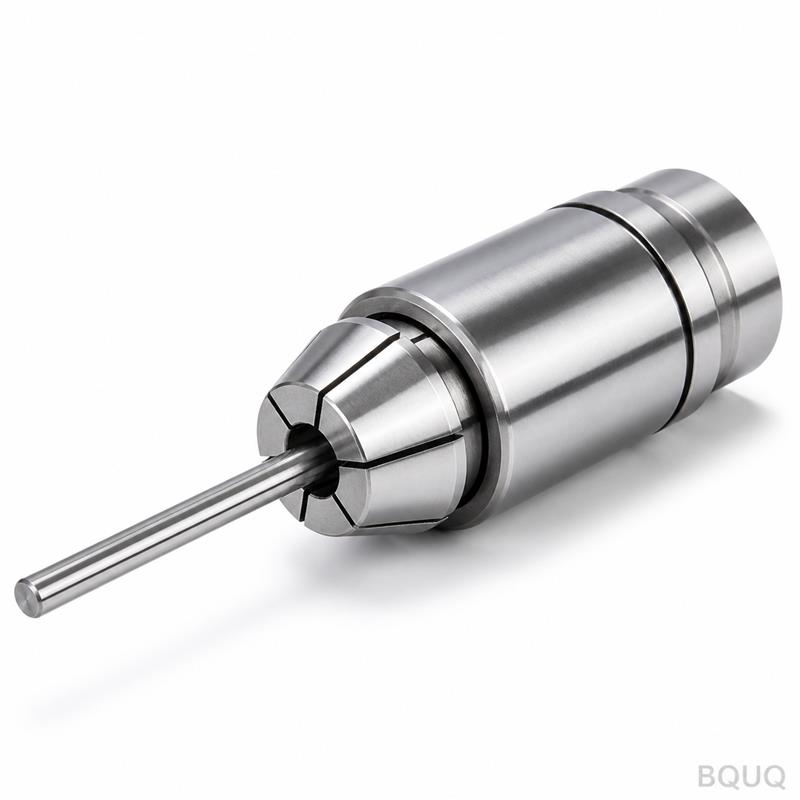
I torni a camme automatici tagliano la barra in un mandrino fisso; i torni svizzeri alimentano la barra attraverso una boccola di guida. BQUQ produce pinze e mandrini per entrambi, ISO9001.
Torni a Camme Automatici vs Torni Svizzeri CNC: Differenze nel Serraggio del Pezzo
I torni a camme automatici e i torni svizzeri CNC lavorano entrambi pezzi da barra tenuta in pinze a molla, ma differiscono su chi controlla il movimento: un automatico a camme muove le sue slitte portautensili tramite camme meccaniche mentre la barra è tenuta in un mandrino fisso, e un tornio svizzero alimenta la barra e la testa motrice attraverso una boccola di guida così che gli utensili taglino proprio sulla faccia della boccola. La conseguenza per il serraggio del pezzo è che gli automatici a camme si affidano alla pinza sia per la presa che per il controllo della lunghezza, mentre le macchine svizzere condividono quel compito tra una pinza e una boccola di guida.
Entrambi i tipi di macchina sono produttori di precisione alimentati a barra, ed entrambi sono la ragione per cui esistono le pinze a molla nelle famiglie di tipi (36, 46, 52, 60, 630, 643) che BQUQ lavora. Ma le architetture di serraggio sono genuinamente diverse, e le pinze adatte a una spesso non sono adatte all'altra. La scelta del tipo di macchina — o della pinza per una macchina esistente — inizia dalla comprensione di dove la barra è supportata e chi decide la lunghezza del pezzo.
Le Due Architetture in Una Vista
Un automatico a camme è una macchina a mandrino singolo o plurimandrino dove le camme meccaniche su un albero a camme azionano le slitte portautensili e l'apertura e chiusura della pinza. Il mandrino tiene la barra in una pinza al naso del mandrino; gli utensili avanzano e si ritraggono mentre le camme ruotano. La lunghezza del pezzo è controllata alimentando la barra contro un fermo o tramite l'indicizzazione della pinza stessa, quindi tranciando.
Un tornio svizzero CNC è una macchina a testa motrice scorrevole. La testa motrice, che afferra la barra in una pinza, scorre assialmente su una guida e alimenta la barra attraverso una boccola di guida fissa o scorrevole. Gli utensili sono disposti attorno alla boccola di guida e tagliano la barra mentre si estende appena oltre la boccola. La barra è supportata nel punto di taglio, non a sbalzo dal mandrino.
| Caratteristica | Automatico a camme | Tornio svizzero CNC |
|---|---|---|
| Movimento slitte | Camme meccaniche | Assi servo CNC |
| Supporto barra al taglio | Solo pinza mandrino | Pinza + boccola di guida |
| Controllo lunghezza pezzo | Fermo di alimentazione / indicizzazione pinza | Posizione asse testa motrice |
| Diametro barra tipico | Da piccolo a medio | Piccolo, spesso sotto la classe ~32 mm |
| Tempo cambio attrezzaggio | Cambio camme, ore | Cambio programma, minuti |
| Forma migliore del pezzo | Tornitura semplice o moderata | Pezzi lunghi e sottili, profili complessi |
Gli intervalli sono tipici, non limiti — gli automatici a camme gestiscono ancora grandi volumi di pezzi semplici a costo unitario molto basso, e le macchine svizzere vincono ovunque i pezzi siano lunghi rispetto al loro diametro o richiedano fresature complesse nello stesso ciclo.
Serraggio del Pezzo: Il Compito della Pinza su Ogni Macchina
Su un automatico a camme la pinza è l'intera storia del serraggio. Afferra la barra per la lavorazione, la rilascia per la corsa di alimentazione, e il suo comportamento assiale interagisce con il meccanismo di alimentazione che spinge la nuova barra al fermo. La presa della pinza deve essere abbastanza forte da resistere alle forze di tranciatura e tornitura, e abbastanza costante da non far variare la lunghezza alimentata.
Su un tornio svizzero la pinza della testa motrice afferra la barra per l'alimentazione e la rotazione, mentre la boccola di guida — essa stessa spesso un elemento simile a una pinza con il proprio foro — supporta la barra proprio agli utensili. La pinza della testa motrice in una macchina svizzera è un elemento di presa e alimentazione; la boccola di guida è l'elemento di precisione che decide quanto dritta e senza vibrazioni sia la barra estesa.
| Funzione | Pinza automatico a camme | Pinza testa motrice svizzera | Boccola di guida |
|---|---|---|---|
| Afferra la barra per il taglio | Sì | Sì | No — supporta, consente la rotazione |
| Alimenta la barra tra i cicli | Sì | Sì (movimento testa motrice) | No — la barra scorre attraverso |
| Controlla la rettilineità della barra all'utensile | Indiretto | Indiretto | Sì — supporta nel punto di taglio |
| Modello di usura | Foro e cono | Foro e cono | Usura del foro per lo scorrimento della barra |
Controllo della Lunghezza: Dove i Due Realmente Divergono
La precisione della lunghezza è la differenza più chiara nel serraggio. Su un automatico a camme, la lunghezza alimentata è impostata meccanicamente: la barra alimenta contro un fermo, la pinza serra, e il fermo si ritrae. Se la pinza afferra la barra qualche micron prima o dopo, o se l'attrito della barra contro il dito di alimentazione varia, la lunghezza alimentata si sposta e la lunghezza del pezzo deriva. I design di pinze a lunghezza fissa (dead-length) aiutano non tirando la barra assialmente durante il serraggio — la differenza tra pinze a strappo (pull-back) e pinze a lunghezza fissa è una delle prime cose da controllare quando le lunghezze dei pezzi su un automatico a camme variano.
Su un tornio svizzero l'asse della testa motrice è un servo CNC, quindi la lunghezza del pezzo è un comando di posizione, non un evento dipendente dall'attrito. Il comportamento assiale della pinza conta meno per la lunghezza; ciò che conta è che afferri abbastanza forte da spingere la barra attraverso la boccola di guida senza slittare, perché la testa motrice spinge letteralmente la barra in avanti attraverso la boccola tra le operazioni.
La regola pratica per gli acquirenti: se vedi una dispersione di lunghezza su un automatico a camme, guarda la costanza di presa della pinza e il meccanismo di alimentazione prima di incolpare la macchina. Se vedi una dispersione di lunghezza su un tornio svizzero, guarda la pinza della testa motrice per slittamenti sotto la spinta di alimentazione e il foro della boccola di guida per usura.
Alimentazione Barra e l'Altra Compagna della Pinza
Gli automatici a camme storicamente usano dita di alimentazione — elementi simili a pinze a molla nell'alimentatore di barra o nella parte posteriore del mandrino — che afferrano la barra solo durante la corsa di alimentazione, poi rilasciano così che la pinza principale faccia il taglio. Il dito di alimentazione è dimensionato alla barra come una pinza, e dita di alimentazione usurate causano lunghezze di alimentazione irregolari proprio come pinze usurate.
Le macchine svizzere traggono la barra da un alimentatore attraverso la testa motrice e la boccola di guida continuamente. L'interfaccia tra alimentatore di barra, pinza della testa motrice e boccola di guida è una catena di fori che devono tutti liberare la barra: un rivestimento nel tubo dell'alimentatore, il foro della pinza e il foro della boccola. Ciascuno è dimensionato alla barra, e ciascuno è un punto di usura. La nostra guida all'alimentazione barra e serraggio copre quella catena in dettaglio.
| Elemento del percorso barra | Automatico a camme | Tornio svizzero |
|---|---|---|
| Tubo alimentatore barra | Dito di alimentazione al retro mandrino | Tubo rivestito, barra spinta in avanti |
| Presa principale | Pinza mandrino | Pinza testa motrice |
| Supporto zona di taglio | Nessuno (naso mandrino) | Boccola di guida agli utensili |
| Punti di usura fori | Pinza, dito di alimentazione | Pinza, boccola, rivestimento |
Scegliere la Pinza per la Macchina
Entrambi i tipi di macchina accettano pinze a molla dalla stessa logica di famiglia: abbina il numero di tipo all'interfaccia del mandrino e del tirante della macchina, poi abbina il foro alla barra. Ma l'enfasi differisce. Per gli automatici a camme, dai priorità alla costanza di presa e al comportamento a lunghezza fissa — la pinza partecipa al controllo della lunghezza. Per le macchine svizzere, dai priorità alla presa della pinza della testa motrice sotto la spinta di alimentazione e tratta la boccola di guida come una parte di precisione soggetta a usura con la propria specifica del foro e il proprio programma di sostituzione.
Le configurazioni svizzere aggiungono un secondo elemento che la maggior parte degli acquirenti dimentica: la boccola di guida stessa. Le boccole fisse fanno scorrere la barra in un foro di supporto liscio; le boccole scorrevoli si muovono con la testa motrice ed eliminano l'esposizione della barra tra la boccola e il taglio. Entrambi i tipi richiedono che i loro fori siano abbinati alla barra con la stessa disciplina di un foro di pinza. Analizziamo la scelta fissa-contro-scorrevole nella nostra boccola di guida copertura dei sistemi di pinze svizzeri.
Cosa Dovrebbe Offrire una Fabbrica
Una fabbrica di pinze che serve entrambi i tipi di macchina può quotare l'elemento giusto per ciascuno: pinze a molla per automatici a camme nelle famiglie 36/46/52/60/630/643, pinze per testa motrice svizzera, grezzi di boccole di guida o boccole finite, e i mandrini che le ospitano. BQUQ lavora pinze e mandrini per pinze da lega indurita e acciaio per molle su una linea CNC che mantiene ±0.005 mm, sotto controllo ISO9001 in un'unica fabbrica a Dongguan — con linee di molle, stampaggio, dissipatori di calore e CNC accanto, la stessa fabbrica che quota la tua pinza può quotare i pezzi che quelle macchine produrranno. Vedi la gamma di pinze per torni automatici e i mandrini per pinze svizzeri e 2J, poi invia marca, modello e specifica barra a sc@bquq.com per un preventivo entro 12 ore lavorative.
Domande Frequenti
D: Gli automatici a camme e i torni svizzeri usano le stesse pinze?
R: Di solito no. La famiglia di pinze (numero di tipo, cono e filettatura) deve corrispondere all'interfaccia del mandrino e del tirante della macchina, e le pinze per testa motrice svizzera funzionano con un sistema di boccola di guida che un automatico a camme non ha. Specifica sempre marca e modello della macchina.
D: Perché i torni svizzeri tengono meglio i pezzi lunghi e sottili?
R: La barra è supportata dalla boccola di guida immediatamente dietro gli utensili, quindi la zona di taglio vede una sezione corta e rigida di barra. Un automatico a camme taglia una barra a sbalzo, che flette e vibra man mano che la lunghezza cresce.
D: Quale macchina necessita di pinze a lunghezza fissa?
R: Gli automatici a camme ne beneficiano di più, perché la lunghezza del pezzo è controllata dall'alimentazione meccanica e qualsiasi strappo assiale dalla pinza la sposta. Le macchine svizzere controllano la lunghezza tramite la posizione dell'asse servo, quindi lo slittamento della presa conta più del comportamento di strappo.
D: Cosa si usura più velocemente su un tornio svizzero, la pinza o la boccola?
R: Di solito la boccola di guida, perché la barra scorre attraverso di essa sotto pieno carico di taglio mentre la pinza solo afferra e rilascia. Le boccole sono parti di precisione soggette a usura — controlla il foro e sostituisci secondo programma prima che l'oscillazione della barra rovini i pezzi.
D: Gli automatici a camme sono obsoleti accanto ai CNC svizzeri?
R: No. Gli automatici a camme vincono ancora su pezzi semplici ad alto volume con costo di ciclo molto basso, e la loro semplicità meccanica si adatta a cicli lunghi e stabili. Il CNC svizzero vince su complessità, cambio rapido e geometrie sottili. Le esigenze di pinze seguono la macchina, non la moda.
Autore: Team Ingegneristico BQUQ. BQUQ è una fabbrica sorgente certificata ISO9001 a Dongguan, Cina, che gestisce lavorazioni CNC, stampaggio metalli, molle personalizzate, dissipatori di calore e linee di pinze sotto lo stesso tetto. Invia disegni a sc@bquq.com o WhatsApp +86 13713157787 per un preventivo entro 12 ore lavorative. www.bquq.com