Pinze 2J per torni svizzeri e automatici: capacità, comportamento a lunghezza fissa, classe di eccentricità e setup. BQUQ lavora le pinze 2J con classe 0.005 mm.
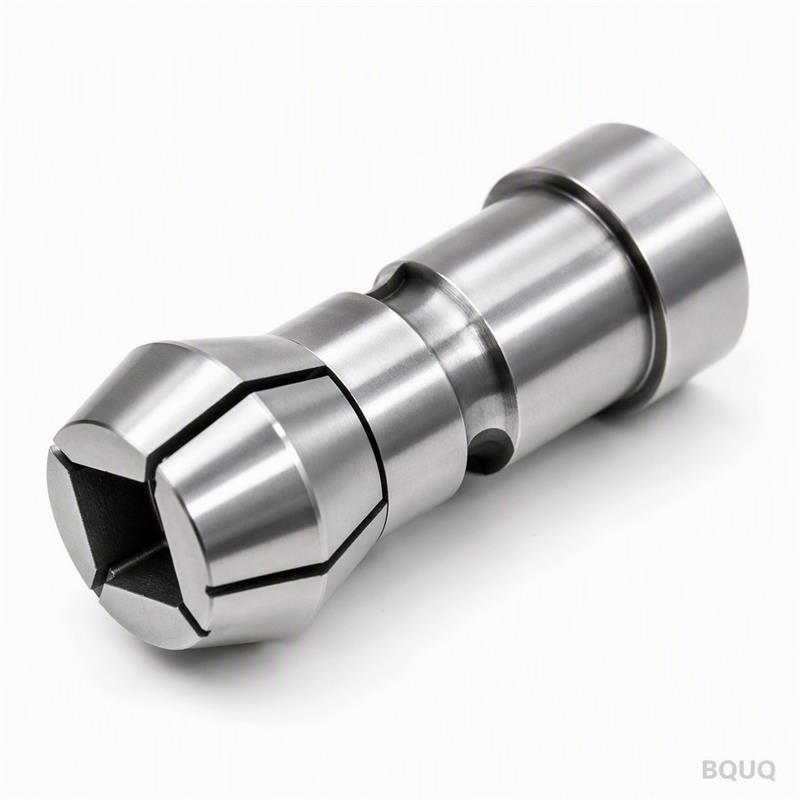
Pinze 2J: Il Cavallo di Battaglia per Torni Svizzeri e Automatici
Una pinza 2J è il sistema di serraggio standard per torni a testa mobile (svizzeri) e automatici: un corpo pinza che si monta sul naso del mandrino, accetta l'intera famiglia di pinze 2J e le apre e chiude tramite il tubo di trazione della macchina. Merita l'etichetta di cavallo di battaglia perché un solo corpo pinza più una serie di pinze 2J copre un'ampia gamma di barre con cambi rapidi e concentricità ripetibile.
Chiedete a qualsiasi officina che utilizza torni svizzeri o automatici a camme cosa tiene la barra e la risposta è solitamente la stessa: un sistema 2J. La famiglia di pinze è compatta, i corpi pinza sono collaudati e l'economia è semplice: si acquista la pinza una volta e poi si comprano solo le piccole ed economiche pinze per ogni nuova dimensione di barra. Questa guida copre cos'è una pinza 2J, cosa controllare quando la si acquista o specifica, e come si comporta sulla macchina.
Cosa Contiene una Pinza 2J
Una pinza 2J è un corpo in acciaio lavorato con tre compiti: montare sul mandrino della macchina, posizionare la pinza concentricamente e trasferire la forza del tubo di trazione al cono di chiusura della pinza. L'anatomia tipica è una flangia o un attacco filettato che corrisponde al naso del mandrino, un foro e un cono di precisione che posizionano la pinza, e un dado o cappuccio che tiene la pinza in posizione mentre il tubo di trazione la tira nel cono per afferrare.
Poiché il corpo pinza è il riferimento di precisione per tutto ciò che segue, la sua qualità di lavorazione stabilisce il limite massimo per la vostra eccentricità. Una pinza il cui alloggiamento è eccentrico o il cui cono non è perfettamente rotondo trasmetterà questo errore a ogni pezzo che afferra, non importa quanto sia buona la pinza. Ecco perché l'alloggiamento e il cono dovrebbero essere rettificati o lavorati su macchine CNC con verifica, non a occhio — BQUQ lavora le sue pinze svizzere tipo 2J su centri di tornitura CNC e mantiene le superfici di posizionamento in una classe di 0.005 mm prima che le pinze vengano mai montate.
Capacità e Copertura
La famiglia 2J copre barre tonde da piccoli diametri fino a circa 38 mm al massimo della gamma, con fori in pollici graduati in 1/64 di pollice e fori metrici comunemente graduati in 0.5 mm. Il materiale esagonale e quadrato riduce la capacità utilizzabile, e i materiali a parete sottile o morbidi possono richiedere un foro dedicato alla dimensione esatta piuttosto che un foro di dimensione vicina. Un piano di copertura realistico si presenta così:
| Forma del materiale | Dimensione massima tipica in 2J | Strategia del foro |
|---|---|---|
| Tonda, tornitura generale | ~38 mm (1-1/2 in) | Ordinare foro 0.03–0.08 mm sopra il materiale, confermare l'adattamento |
| Esagonale | ~70–80% del massimo tondo | Abbinare sulla misura tra facce piatte, controllare il gioco sugli spigoli |
| Quadrata | ~60–70% del massimo tondo | Abbinare sulla misura tra facce piatte, controllare la marcatura dei bordi |
| Tubo morbido o a parete sottile | Sotto il massimo del sistema | Foro a misura esatta, collasso ridotto |
Il modello è il punto: la capacità non è un singolo numero, è una funzione di forma e materiale. Una pinza 2J afferra su una piccola gamma — tipicamente pochi centesimi di millimetro di collasso — quindi deve essere ordinata al diametro effettivo del materiale, non a uno nominale. Quando il materiale varia più di quanto la pinza possa assorbire, lo si vede come perdita di presa o pezzi fuori tondo, non come un difetto della pinza.
Come si Comporta una Pinza 2J sulla Macchina
Due comportamenti definiscono la pinza 2J in funzione. Primo, è un sistema a foro passante: la barra passa attraverso la pinza e il mandrino, che è esattamente ciò di cui una macchina svizzera a testa mobile ha bisogno per l'alimentazione. Secondo, il suo comportamento assiale dipende dal design della pinza e del corpo — la differenza tra azione a lunghezza fissa (dead-length) e azione a ritiro (pull-back), trattata completamente nel nostro confronto su pinze a lunghezza fissa vs pinze a ritiro.
In termini semplici: un'azione a ritiro tira la barra assialmente verso il mandrino mentre la pinza si chiude, il che va bene quando i pezzi sono tagliati contro una battuta o il controllo della lunghezza è lasco; un'azione a lunghezza fissa chiude la pinza senza muovere la barra assialmente, il che è importante quando si alimenta il materiale e si taglia a lunghezza ripetutamente. Per il lavoro su macchine svizzere, dove la lunghezza di ogni pezzo dipende dalla barra che rimane ferma quando la pinza riafferra, il comportamento a lunghezza fissa è di solito la scelta giusta. Chiedete al vostro fornitore di pinze quale azione produce il loro corpo prima di impegnarvi, non dopo aver misurato la deriva sulla prima serie.
La tabella seguente riassume le differenze operative che sentirete realmente in officina:
| Comportamento | Cosa succede durante la chiusura | Ideale per | Attenzione a |
|---|---|---|---|
| Ritiro (Pull-back) | La pinza tira la barra verso il mandrino | Pezzi sfacciati contro una battuta | Deriva di lunghezza al riafferraggio |
| Lunghezza fissa (Dead-length) | La pinza collassa in posizione | Lavoro con barra alimentata su svizzeri e automatici | Richiede una sede accurata |
| Cono standard | Pinza tirata nel cono del corpo | Tornitura generale | L'eccentricità dipende dalla pulizia del cono |
Acquisto e Configurazione di una Pinza 2J
Quando specificate una pinza 2J, controllate cinque cose. Il montaggio sul mandrino deve corrispondere alla vostra macchina — flangia o filettatura, e la dimensione corretta del naso. Il foro passante deve liberare la vostra barra più grande più un po' per i trucioli. La sede della pinza deve essere concentrica e il cono di chiusura pulito e senza segni. L'attuatore deve adattarsi alla forza e alla corsa del vostro tubo di trazione. E le pinze devono essere disponibili nei fori che effettivamente utilizzate — non ha senso possedere una pinza di precisione con tre pinze non corrispondenti.
L'installazione è semplice ma severa: pulire il naso del mandrino e la superficie di montaggio della pinza, serrare i dispositivi di fissaggio in modo uniforme e controllare con un comparatore la sede della pinza o una pinza di prova. La nostra guida all'installazione delle pinze fornisce la procedura completa di serraggio e seduta. Se state partendo da zero su una linea svizzera o automatica, il team di ingegneria BQUQ può abbinare pinze e pinze per torni automatici alla vostra lista di materiali — inviate le dimensioni delle barre e i dettagli del mandrino a sc@bquq.com e riceverete un preventivo entro 12 ore lavorative.
Domande Frequenti
D: Quali dimensioni di barra può tenere una pinza 2J?
R: La pinza tiene qualsiasi pinza 2J montiate, e la famiglia copre barre tonde da piccoli diametri fino a circa 38 mm al massimo della gamma. Ogni pinza è ordinata per una specifica dimensione di materiale, quindi la copertura dipende dalle pinze che avete in magazzino.
D: Una pinza 2J è a lunghezza fissa (dead-length)?
R: Dipende dal design della pinza e del corpo, non solo dal nome 2J. Alcuni sistemi 2J tirano indietro la barra durante la chiusura; le versioni a lunghezza fissa si chiudono senza movimento assiale. Il lavoro di alimentazione su macchine svizzere di solito richiede un'azione a lunghezza fissa.
D: Una pinza 2J può gestire materiale esagonale e quadrato?
R: Sì, con i giusti fori delle pinze. I fori esagonali e quadrati riducono la capacità utilizzabile — tipicamente al 60–80% del massimo tondo — e devono essere abbinati al materiale sulla misura tra facce piatte con il gioco sugli spigoli controllato.
D: Quanta eccentricità dovrei aspettarmi da un sistema 2J?
R: Con un cono pulito, una pinza correttamente seduta e materiale diritto, una pinza ben lavorata mantiene la concentricità nella classe di 0.005 mm al naso della pinza. Misurate con una barra di prova rettificata e un comparatore al naso e di nuovo a 25–50 mm di distanza.
D: Perché la mia pinza 2J non si chiude completamente su alcune barre?
R: Molto probabilmente il foro è sottodimensionato per il materiale effettivo, o la sede del cono è sporca, o la corsa del tubo di trazione è impostata corta. Misurate la barra, pulite il cono e verificate la corsa completa della pinza prima di sospettare della pinza stessa.
Autore: Team di Ingegneria BQUQ. BQUQ è una fabbrica sorgente certificata ISO9001 a Dongguan, Cina, che gestisce lavorazioni CNC, stampaggio metalli, molle personalizzate, dissipatori di calore e linee di pinze sotto lo stesso tetto. Inviate i disegni a sc@bquq.com o WhatsApp +86 13713157787 per un preventivo entro 12 ore lavorative. www.bquq.com