Ordinare dissipatori di calore personalizzati: specifiche termiche, revisione DFM, preventivo, test del campione e approvazione, con liste di controllo. BQUQ (ISO9001, Dongguan) preventiva in 12 ore.
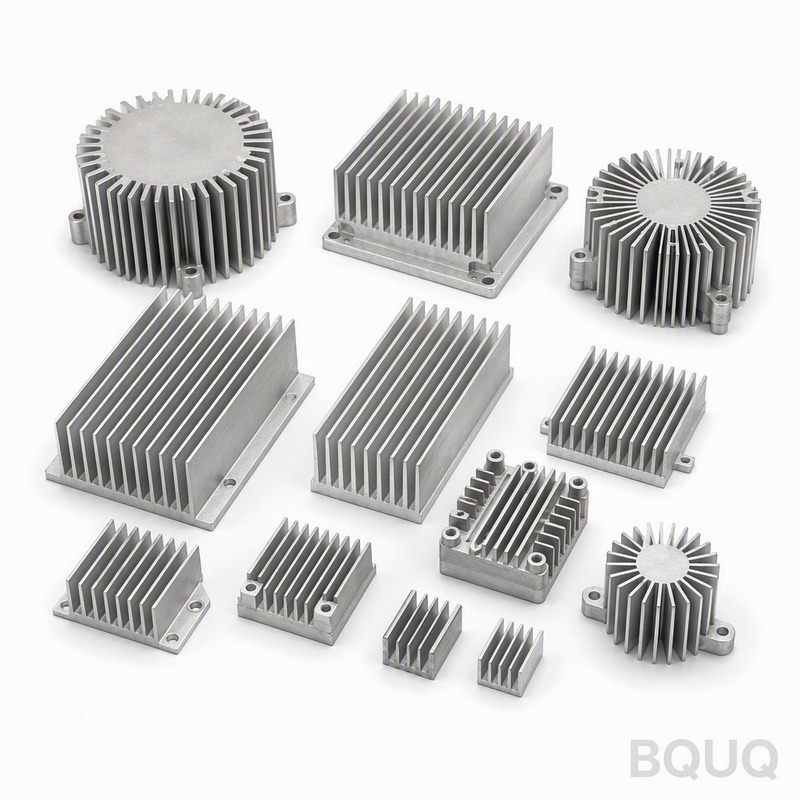
Ordinare Dissipatori di Calore Personalizzati: Il Flusso di Lavoro dal Disegno al Campione
Ordinare un dissipatore di calore personalizzato passa attraverso sei fasi: inviare una specifica termica e meccanica completa, ottenere una revisione DFM del percorso di costruzione, ricevere un preventivo con i costi di attrezzaggio separati, approvare un campione sulla base di un test termico e dimensionale scritto, rilasciare la produzione con i dati di ispezione e conservare la documentazione per gli ordini ripetuti. La fase che decide tutto è la prima: una specifica che dice "circa 50 W, mantienilo fresco" non può essere preventivata, solo ipotizzata.
I dissipatori di calore personalizzati falliscono nel percorso dal disegno al campione in modi prevedibili: i requisiti termici arrivano come frasi vaghe, i disegni meccanici omettono la planarità della base che fa funzionare il TIM, e nessuno scrive i criteri di superamento prima che arrivi il campione. Questo flusso di lavoro è quello che usiamo in BQUQ per le linee di dissipatori estrusi e dissipatori lavorati a CNC — è volutamente noioso, ed è noioso perché funziona.
Fase 1: La Specifica Termica e Meccanica
Il pacchetto di richiesta necessita di cinque valori termici e un disegno meccanico. I cinque valori sono: potenza dissipata nel caso peggiore (misurata, non tipica da datasheet), temperatura massima consentita del case o della giunzione, temperatura ambiente nel caso peggiore, flusso d'aria (velocità o modello di ventola, o le parole "aria ferma"), e l'ingombro in cui il dissipatore deve rientrare. Il disegno aggiunge la verità meccanica: schema dei fori di montaggio, impronta del componente, spazio per clip o viti, e qualsiasi caratteristica che il dissipatore deve evitare sulla scheda.
| Voce di specifica | Valore di esempio | Perché è importante |
|---|---|---|
| Potenza dissipata | 28 W misurati nel caso peggiore | Imposta l'intero budget |
| Temperatura massima del case | 95 °C | La linea di superamento/fallimento |
| Temperatura ambiente peggiore | 55 °C | Da cui si misura il delta-T |
| Flusso d'aria | Aria ferma, o 2 m/s canalizzato | Cambia completamente la geometria |
| Ingombro | 120 × 90 × 45 mm max | Ciò che fisicamente si adatta |
| Necessità di planarità della base | ≤ 0,1 mm su 100 mm | Decide tra lavorazione CNC ed estrusione |
Punto chiave: i valori termici mancanti costringono la fabbrica a fare assunzioni, e le assunzioni vengono prezzate come margine — si paga per l'ipotesi in ogni caso. Una specifica completa ottiene un preventivo diretto; una vaga ottiene uno difensivo. Se la potenza non è ancora misurata, dillo e aggiungi margine in quel passaggio invece di lasciarlo in silenzio.
Fase 2: Revisione DFM — Quale Percorso di Costruzione?
Con la specifica in mano, la fabbrica dovrebbe dirti quale processo realizza il pezzo, non chiederti quale vuoi. Il percorso dipende dalla quantità, dalla geometria e dalla precisione della superficie di montaggio. Se le alette sono dritte, il volume giustifica uno stampo o un profilo esistente si adatta, l'estrusione vince. Se la base necessita di tasche e planarità stretta a basso volume, la lavorazione CNC vince. Se la geometria ha alette in due direzioni, la lavorazione CNC è l'unica opzione indipendentemente dal volume.
| Segnale di progettazione | Percorso che il DFM dovrebbe scegliere |
|---|---|
| Alette dritte, profilo esistente si adatta, qualsiasi volume | Estrusione, taglio a misura |
| Alette dritte, profilo personalizzato, 500+ pezzi/anno | Estrusione con nuovo stampo |
| < ~300 pezzi, o caratteristiche complesse della base | Lavorazione CNC da pieno |
| Alette in due direzioni, alette a perno, alette radiali | Lavorazione CNC |
| Volume molto alto, alette sottili, economia della lamiera | Alette stampate o piegate |
| Modulo di potenza grande, necessita planarità della base + alette | Ibrido: alette estrose, base lavorata |
Punto chiave: una revisione DFM che nomina un percorso di costruzione e lo difende con la tua quantità è ingegneria; un preventivo che assume silenziosamente un processo è un documento di vendita. Chiedi quale processo è stato prezzato e quanto costerebbe l'alternativa — in BQUQ la risposta arriva da un'unica fabbrica che gestisce estrusione, CNC e stampaggio, quindi la raccomandazione non protegge una singola macchina.
Fase 3: Il Preventivo — L'Attrezzaggio Deve Essere una Voce Separata
Ogni preventivo personalizzato dovrebbe separare i costi una tantum dai costi per pezzo. Per un'estrusione ciò significa lo stampo; per la lavorazione CNC significa programmazione e tempo del primo articolo. Vedere la separazione ti dice la matematica della quantità: dividi l'attrezzaggio per il tuo volume annuale reale e saprai se il percorso sopravvive al contatto con la tua previsione. Il preventivo dovrebbe anche nominare lega, finitura e assunzioni di tolleranza, perché ognuna muove il prezzo.
| Voce di preventivo | Cosa copre | Cosa controllare |
|---|---|---|
| Attrezzaggio (stampo o setup) | Costo una tantum | Si ammortizza sul tuo volume reale |
| Materiale e processo | Estrusione o lavorazione per pezzo | Corrisponde al percorso DFM |
| Operazioni secondarie | Taglio, fresatura, foratura, maschiatura | Qualcuna può essere combinata o eliminata? |
| Finitura | Tipo di anodizzazione e copertura | Nera per passivo, trasparente sotto ventola |
| Ispezione/documentazione | Rapporti di lotto, certificati materiali | Concordati prima dell'ordine |
Punto chiave: se il preventivo non ha una voce di attrezzaggio, o non è necessario alcun attrezzaggio (percorso lavorato) o il costo dello stampo è nascosto nel prezzo per pezzo — chiedi quale. La guida sui fattori di costo dei dissipatori mostra come ogni strato della pila viene prezzato, così il preventivo si legge come una mappa piuttosto che un numero.
Fasi 4–5: Campione, Test e Approvazione Contro Criteri Scritti
Il campione è dove la specifica diventa fisica, e significa qualcosa solo se i criteri di superamento sono stati scritti nella Fase 1. Approva il campione su quattro controlli: dimensioni rispetto al disegno (fori di montaggio, planarità della base, ingombro), il test termico (temperatura del case alla potenza nominale dopo l'equilibrio, usando il TIM di produzione), la finitura (colore, copertura, nessuna mancanza di mascheratura), e l'adattamento nell'assemblaggio nel prodotto reale. Scrivi i risultati — il documento di approvazione del campione è ciò a cui fanno riferimento sia la produzione che il prossimo ordine.
| Controllo del campione | Metodo | Esempio di superamento |
|---|---|---|
| Planarità della base | Righello/spessimetro o CMM | ≤ 0,1 mm su 100 mm |
| Caratteristiche di montaggio | Perni calibro, calibri, CMM | Fori in posizione secondo disegno |
| Prestazioni termiche | Termocoppia + test di potenza | Case ≤ 95 °C a 28 W, 55 °C ambiente |
| Adattamento nell'assemblaggio | Montaggio nel prodotto reale | Nessuna interferenza, compressione uniforme del TIM |
| Finitura | Visiva + controllo spessore | Anodizzazione nera uniforme, nessuna zona scoperta |
Punto chiave: il test termico sul campione è l'unico numero che prova che il disegno era corretto, quindi eseguilo con il materiale di interfaccia di produzione — testare con un TIM diverso o senza TIM non valida nulla. Approva per iscritto e conserva il record; quando arriva il primo lotto di produzione, gli stessi quattro controlli all'ispezione in ingresso chiudono il ciclo.
Fase 6: Produzione e Ordini Ripetuti
La produzione è un problema di ripetibilità. L'ordine dovrebbe ristabilire la specifica del campione approvato, la fabbrica dovrebbe eseguire lo stesso processo con gli stessi punti di ispezione, e il lotto dovrebbe essere spedito con i dati di ispezione dimensionale così il controllo qualità in ingresso può verificare senza riprogettare il pezzo. Il controllo di processo ISO9001 copre il lato burocratico; il tuo lato è mantenere insieme il disegno approvato, il record del test e la corrispondenza, così il prossimo ordine — e il prossimo ingegnere che tocca il prodotto — ha l'intera storia termica. Questa documentazione è anche ciò che rende revisionabile un aumento di prezzo e onesto un confronto con una seconda fonte. Invia il pacchetto completo a sc@bquq.com e il preventivo arriva entro 12 ore lavorative; l'articolo sul flusso di lavoro di selezione dei dissipatori mostra i passaggi ingegneristici che alimentano la Fase 1 se il budget termico non è ancora scritto.
Domande Frequenti
D: Quali informazioni servono a una fabbrica per preventivare un dissipatore di calore personalizzato?
R: Potenza dissipata, temperatura massima del case o della giunzione, temperatura ambiente nel caso peggiore, flusso d'aria (o "aria ferma"), l'ingombro e un disegno con le caratteristiche di montaggio. I valori termici e il disegno meccanico insieme permettono alla fabbrica di dimensionare, selezionare il processo e prezzare il pezzo in un'unica passata.
D: Quanto tempo richiede un campione di dissipatore di calore personalizzato?
R: I campioni lavorati a CNC tipicamente partono entro giorni perché non serve attrezzaggio; i campioni estrusi con un nuovo stampo di solito richiedono 2–4 settimane inclusa la creazione dello stampo e le prime pressate. I profili esistenti tagliati e lavorati a misura si collocano tra i due.
D: Il costo dello stampo di estrusione dovrebbe essere una voce separata nel preventivo?
R: Sì. L'attrezzaggio è un costo una tantum che dovrebbe essere visibile così puoi dividerlo per il tuo volume reale e verificare l'economia. Un preventivo con costo dello stampo nascosto fa sembrare sbagliato il prezzo per pezzo e rende impossibile il confronto con la lavorazione CNC.
D: Cosa dovrei testare su un campione di dissipatore prima di approvarlo?
R: Dimensioni (planarità della base, fori di montaggio, ingombro), prestazioni termiche alla potenza nominale dopo l'equilibrio con il TIM di produzione, copertura della finitura e adattamento nell'assemblaggio nel prodotto reale. Approva per iscritto contro i criteri stabiliti prima che il campione fosse ordinato.
D: Quali documenti dovrebbero accompagnare un lotto di produzione di dissipatori?
R: Rapporti di ispezione dimensionale che coprono le caratteristiche critiche del disegno, certificati di materiale/lega e verifica della finitura. Per pezzi personalizzati, conserva il record del campione approvato e il test termico — sono il riferimento per ogni ordine ripetuto.
Articoli Correlati
- heat-sink-selection-workflow — Altro dalla serie di ingegneria sulla gestione termica BQUQ.
- heat-sink-cost-factors — Altro dalla serie di ingegneria sulla gestione termica BQUQ.
- heat-sink-thermal-testing — Altro dalla serie di ingegneria sulla gestione termica BQUQ.
Risorse Correlate
- Chi è BQUQ: una fabbrica sorgente certificata ISO9001 a Dongguan con quattro linee di produzione sotto lo stesso tetto.
- Dissipatori di calore e parti termiche: opzioni estrose, lavorate a CNC e stampate dalla linea termica — dissipatori estrusi, dissipatori lavorati a CNC, dissipatori stampati.
- Tendenze di settore: analisi di produzione, mercato dei materiali e sourcing per acquirenti.
- Articoli tecnici: guide di ingegneria e confronti di processo — altro da cui proviene questo articolo.
- Hub FAQ: risposte rapide su CNC, stampaggio, molle e dissipatori.
- Casi di studio: pezzi reali e numeri reali da progetti che abbiamo ingegnerizzato e consegnato.
- Contattaci: invia il tuo disegno e ottieni un preventivo entro 12 ore lavorative.
Scritto dal Team di Ingegneria BQUQ. BQUQ è una fabbrica sorgente certificata ISO9001 a Dongguan, Cina, che gestisce linee di lavorazione CNC, stampaggio metalli, molle personalizzate, dissipatori di calore e pinze sotto lo stesso tetto. Invia i disegni a sc@bquq.com o WhatsApp +86 13713157787 per un preventivo entro 12 ore lavorative. www.bquq.com