Cosa promette realmente una classe di eccentricità di una pinza: dove e come viene misurata, più l‘accumulo di errori fino al pezzo. BQUQ lavora pinze di precisione con classe 0,005 mm.
Classi di Precisione delle Pinze: Cosa Promette Davvero la Specifica di Eccentricità
La classe di eccentricità di una pinza è una promessa su una misurazione specifica: l'eccentricità totale indicata (TIR) al naso della pinza, rilevata con una barra di prova rettificata di precisione, su una sede pulita, in un setup controllato. Non è una promessa sul vostro pezzo, sul vostro mandrino o sulla punta dell'utensile — ogni elemento a valle della pinza aggiunge il proprio errore. Leggete la classe per quello che è, e i vostri pezzi corrisponderanno alle specifiche invece di deludervi.
I cataloghi delle pinze mettono i valori di eccentricità in prima pagina per un motivo: è la prima cosa che gli acquirenti confrontano. Ma lo stesso 0,005 mm stampato su due pinze diverse può descrivere due realtà differenti a seconda di come è stato misurato, con quale barra e a quale distanza dal naso. Questa guida decodifica la specifica: quali classi esistono, come vengono misurate e dove va realmente il budget di errore una volta che la pinza è sulla vostra macchina.
La Scala delle Classi e il Costo di Ogni Livello
La precisione delle pinze è solitamente venduta in tre grandi livelli, e il prezzo sale più velocemente dei numeri. Le pinze standard servono per foratura e fresatura generale; le pinze di precisione esistono per operazioni di finitura; le pinze ad alta precisione sono per quei lavori dove l'eccentricità è la caratteristica principale. I livelli non sono uno standard legale — la ISO 15488 definisce la geometria e il metodo di prova per le pinze ER, mentre i produttori definiscono le proprie etichette di classe al di sopra di essa, quindi confrontate le condizioni di prova prima di confrontare i numeri.
| Classe (tipica) | Eccentricità tipica al naso | Multiplo di costo tipico | Dove la classe giustifica il prezzo |
|---|---|---|---|
| Standard | ~0,015 mm | 1,0× | Foratura, sgrossatura, portautensili generale |
| Precisione | ~0,005–0,008 mm | 1,5–3× | Finitura, alesatura, posizione fori precisa |
| Alta precisione | ≤0,005 mm | 3×+ | Micro-utensili, caratteristiche critiche, usura utensile minima |
Questi sono livelli industriali tipici con rapporti di prezzo tipici, non una tabella fissa — ogni produttore pubblica i propri. La lezione economica è la stessa ovunque: l'eccentricità costa denaro in una curva, quindi acquistate la classe di cui l'operazione più critica ha bisogno, non quella che fa sembrare bello il catalogo. Se uno strumento su dieci necessita di precisione, comprate nove standard e uno di precisione.
Come Viene Realmente Misurata una Classe di Eccentricità
Il test standard è estremamente specifico. La pinza viene pulita e seduta in un portapinza pulito. Una barra di prova, rettificata alla dimensione nominale esatta del gambo e dritta a livello sub-micronico, viene bloccata con la coppia specificata. Un comparatore legge la superficie della barra mentre il mandrino o il portapinza ruota lentamente — l'eccentricità totale indicata (TIR) è la differenza tra le letture massima e minima. Il numero è normalmente indicato al naso, e talvolta anche a una distanza prestabilita, perché l'eccentricità cresce con la distanza dalla presa se la barra si inclina.
Tre dettagli decidono se due numeri "uguali" sono confrontabili. Primo, la barra: una barra di qualità produttiva con 0,005 mm di curvatura propria dominerebbe la lettura. Secondo, la posizione: l'eccentricità al naso e quella a 50 mm di distanza possono differire più della classe stessa se la pinza afferra con qualsiasi inclinazione. Terzo, la coppia: dadi sottoposti a coppia insufficiente o eccessiva cambiano la lettura più della differenza tra le classi. Una scheda tecnica che non indica barra, distanza e coppia è un foglio di marketing.
| Variabile di misurazione | Perché è importante |
|---|---|
| Rettilineità della barra di prova | L'errore della barra si aggiunge direttamente alla lettura |
| Posizione del comparatore | L'eccentricità cresce con la distanza dal naso |
| Coppia del dado | Modifica la chiusura e la sede della pinza |
| Pulizia della sede | Un granello di truciolo è un evento di eccentricità |
| Velocità di rotazione | La rotazione manuale lenta è lo standard; la velocità aggiunge le proprie dinamiche |
L'Accumulo di Errori: Dalla Classe della Pinza alla Realtà del Pezzo
È qui che nasce la maggior parte delle delusioni. La classe della pinza è un termine in un budget di errore che comprende: eccentricità del naso mandrino, precisione del cono del portapinza o della pinza, concentricità della sede della pinza, classe della pinza, sede del dado, rettilineità dell'utensile o della barra — e per il serraggio del pezzo, la rotondità e rettilineità del materiale stesso. Una pinza da 0,005 mm su un mandrino con eccentricità al naso di 0,01 mm produce pezzi nella classe 0,015 mm, e non è colpa della pinza. Il nostro approfondimento sull'eccentricità delle pinze illustra l'intera catena dal mandrino al pezzo.
Il metodo pratico è misurare l'insieme, non il componente. Montate la pinza e il mandrino, bloccate una barra di prova rettificata e leggete il TIR al naso e a una distanza di lavoro. Quel numero è ciò che il vostro processo ha realmente. Se soddisfa il vostro requisito, la classe sta facendo il suo lavoro; se non lo soddisfa, risalite attraverso l'accumulo — sede del mandrino, cono del portapinza, mandrino — finché non trovate il termine che non sta rendendo al meglio.
| Assieme | Contributo TIR tipico da controllare |
|---|---|
| Naso mandrino | Condizione della macchina; verificare con un portapinza master |
| Cono mandrino/portapinza | Coni sporchi o danneggiati dominano |
| Sede della pinza | Usura e trucioli qui rovinano qualsiasi pinza |
| Classe della pinza | Il numero che avete acquistato |
| Rettilineità barra/utensile | Spesso il termine nascosto più grande |
Cosa Fare con la Classe
Acquistate in base a un'esigenza misurata, non a un titolo. Definite l'eccentricità che la vostra caratteristica più critica richiede realmente al punto di taglio, risalite attraverso l'accumulo con contributi realistici e arriverete a una classe — di solito inferiore a quanto suggerisce il marketing. Poi verificate all'arrivo con la vostra barra e il vostro comparatore, e riverificate dopo che la pinza è stata in servizio, perché usura, ruggine e abuso degradano le classi più velocemente di quanto i cataloghi ammettano.
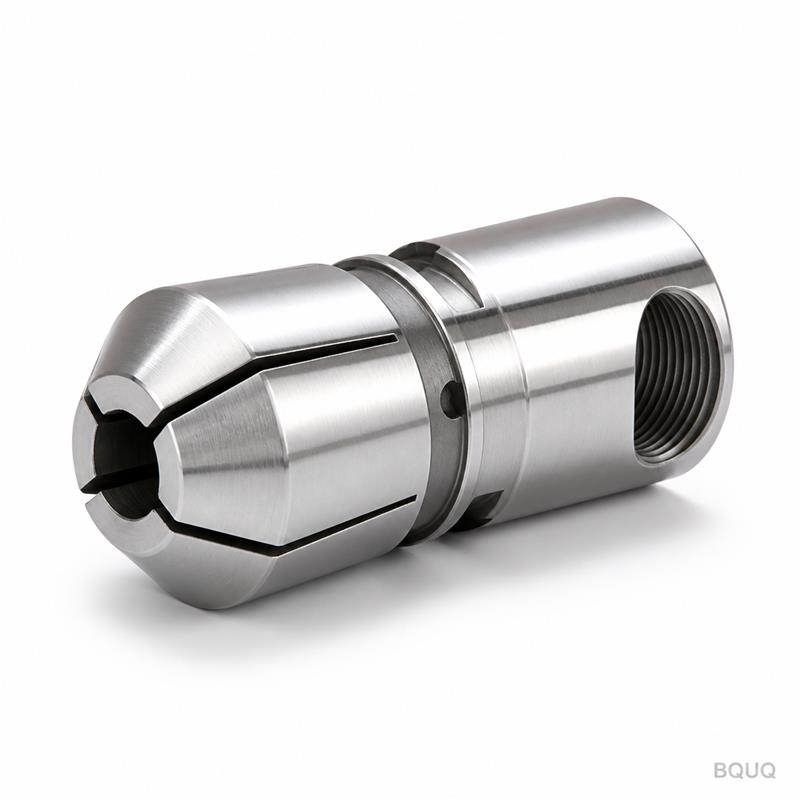
La qualità di produzione è dove le classi vengono create o perse. Il foro, il cono e le fessure di una pinza devono essere lavorati e finiti in modo che i segmenti di chiusura rimangano concentrici sotto carico — ecco perché BQUQ lavora pinze a molla per torni automatici e mandrini portapinza in lega indurita e acciaio per molle su attrezzature CNC con capacità di ±0,005 mm, trattati termicamente e controllati piuttosto che presunti. La stessa disciplina si applica ai mandrini portapinza per portautensili che ospitano le pinze ER. Inviate il vostro requisito di eccentricità e le dimensioni del materiale a sc@bquq.com per un preventivo entro 12 ore lavorative.
Domande Frequenti
D: Cosa significa realmente "eccentricità 0,005 mm" su una pinza?
R: Significa eccentricità totale indicata al naso della pinza misurata con una barra di prova rettificata in una sede pulita e con la coppia corretta — non l'eccentricità del vostro pezzo. Aspettatevi che il numero cresca alla punta dell'utensile o sulla superficie del pezzo man mano che l'accumulo aggiunge il proprio errore.
D: Perché i miei pezzi mostrano più eccentricità della classe della pinza?
R: La pinza è un termine in un accumulo di errori che include l'eccentricità del naso mandrino, la condizione del cono del mandrino, la pulizia della sede e la rettilineità del materiale. Misurate l'assieme con una barra di prova e risalite attraverso l'accumulo per trovare il vero contributore.
D: Una pinza di classe precisione vale il sovrapprezzo?
R: Solo dove l'operazione lo richiede — finitura, alesatura e caratteristiche critiche. Per foratura generale e sgrossatura una pinza standard dà lo stesso risultato. Acquistate la precisione per gli utensili che determinano la vostra tolleranza, lo standard per il resto.
D: Come devo verificare la classe di eccentricità di una pinza all'arrivo?
R: Pulite la sede, montate la pinza in un portapinza pulito, bloccate una barra di prova rettificata e dritta alla dimensione nominale del gambo, serrate il dado alla coppia specificata e leggete il TIR al naso e a una distanza prestabilita con il mandrino ruotato lentamente a mano.
D: Una pinza ad alta precisione può riparare un mandrino usurato?
R: No. La pinza si siede nel mandrino, quindi l'usura del cono del mandrino, lo sporco o l'eccentricità passano direttamente al lavoro. Riparate prima la sede, poi spendete sulla classe della pinza — aggiornare la pinza su un mandrino usurato significa pagare per una precisione che non potete utilizzare.
Redatto dal Team Ingegneristico BQUQ. BQUQ è una fabbrica sorgente certificata ISO9001 a Dongguan, Cina, che gestisce linee di lavorazione CNC, tranciatura/stampaggio metalli, molle su misura, dissipatori di calore e pinze sotto lo stesso tetto. Inviate i disegni a sc@bquq.com o WhatsApp +86 13713157787 per un preventivo entro 12 ore lavorative. www.bquq.com