Dimensiona un dissipatore con una sola equazione: resistenza richiesta da watt, temperatura ambiente e di case. Esempio pratico. BQUQ (ISO9001, Dongguan) preventivi in 12 ore.
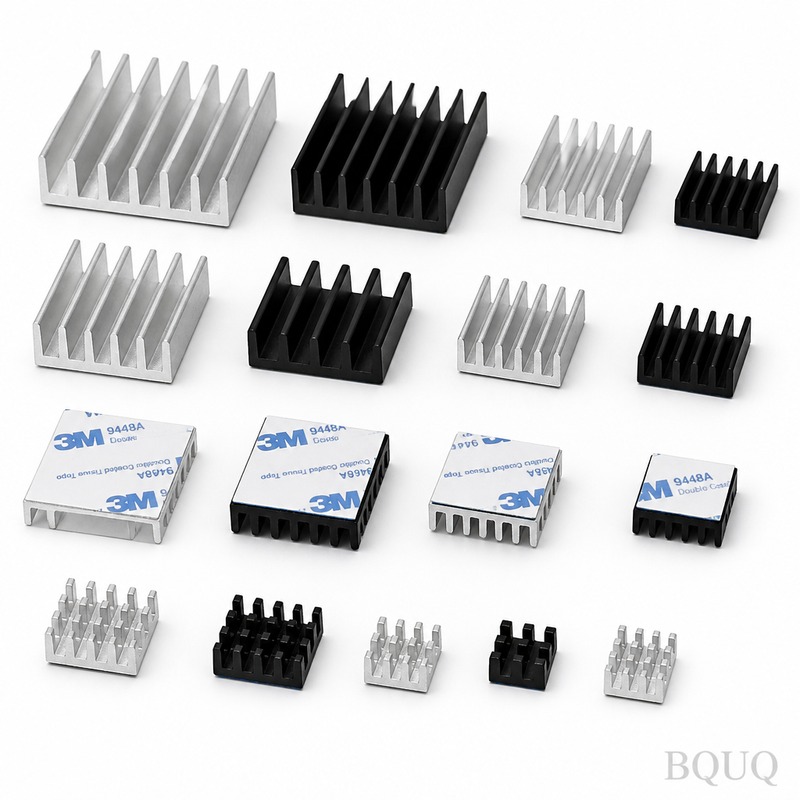
Dimensionamento del Dissipatore: Calcolo Termico Dettagliato per il Tuo Budget di Potenza
Dimensiona un dissipatore partendo da un solo numero: la massima resistenza termica consentita tra il case del componente e l'aria ambiente. La resistenza richiesta dissipatore-aria è uguale a (temperatura massima del case meno la temperatura ambiente nel caso peggiore) diviso la potenza dissipata, meno la resistenza di interfaccia tra case e dissipatore. Se il tuo budget risulta essere 2,5 K/W, hai bisogno di un dissipatore con una resistenza di 2,5 K/W o inferiore al tuo flusso d'aria — qualsiasi altra cosa è solo un'ipotesi travestita da ingegneria.
Il calcolo è volutamente semplice perché deve sopravvivere al contatto con la realtà: temperature ambiente reali, flusso d'aria reale, materiali di interfaccia reali. Questa guida illustra un esercizio di dimensionamento completo, dai watt al numero di parte finale, con i valori tipici che puoi inserire nel tuo budget prima di inviare qualsiasi cosa a una fabbrica.
L'Equazione Chiave per Ogni Dissipatore
Ogni problema di dissipazione è una serie di resistenze termiche impilate tra la sorgente di calore e l'aria. La resistenza giunzione-case è fissata dal package del componente. La resistenza case-dissipatore è determinata dal tuo materiale di interfaccia e dal montaggio. La resistenza dissipatore-aria è l'unico termine che puoi acquistare — è il dissipatore stesso.
Resistenza richiesta dissipatore-aria: Rth(sa) = (Tcase,max − Tamb,max) / P − Rth(interfaccia)
In parole povere: prendi la temperatura massima che il case del componente può raggiungere, sottrai l'aria più calda che il prodotto vedrà mai, dividi per la potenza nel caso peggiore, e ciò che rimane dopo aver sottratto l'interfaccia è la resistenza massima del dissipatore che puoi tollerare.
| Collegamento termico | Valore tipico | Note |
|---|---|---|
| TO-220 giunzione→case | 2,5–4 K/W | Package storico, necessita di un buon dissipatore |
| TO-247 giunzione→case | 0,3–0,6 K/W | Aletta grande, comune per MOSFET e diodi |
| LED di potenza giunzione→punto di saldatura | 1–3 K/W | Dipende dalla dimensione del die e dal substrato |
| Modulo IGBT giunzione→piastra di base | 0,1–0,3 K/W | Il substrato DBC ampio distribuisce bene il calore |
| Grasso, interfaccia 25 × 25 mm | 0,1–0,3 K/W | Linea di incollaggio sottile, miglior rapporto qualità/prezzo |
| Pad in silicone, 25 × 25 mm | 0,4–1,0 K/W | Assemblaggio facile, resistenza più elevata |
| Senza TIM (contatto metallico a secco) | 0,5–1,5 K/W | Il traferro d'aria domina; da evitare in produzione |
Concetto chiave: l'interfaccia raramente è gratuita. Su un TO-247 che dissipa 25 W, ogni 0,1 K/W di interfaccia costa 2,5 °C di temperatura del case — ecco perché la parte più economica del sistema di raffreddamento è spesso la più redditizia da migliorare. Il contesto completo sulla resistenza termica è nella nostra guida alla resistenza termica dei dissipatori.
Esempio Pratico: Dimensionamento per un MOSFET da 25 W in Aria Libera
Prendi un MOSFET TO-247 che dissipa 25 W nel caso peggiore. Il prodotto è destinato a uso interno, quindi la temperatura ambiente massima è di 50 °C. Il datasheet consente una giunzione a 150 °C e la resistenza termica giunzione-case del package è di 0,4 K/W. Prevedi un'interfaccia in grasso da 0,3 K/W. Aggiungi un margine di potenza del 20% per non dimensionare il dissipatore esattamente al limite.
Passo 1 — budget di giunzione: (150 − 50) °C = 100 K totali consentiti da giunzione ad aria. Passo 2 — potenza di progetto con margine: 25 W × 1,2 = 30 W. Passo 3 — resistenza totale consentita: 100 K / 30 W = 3,33 K/W. Passo 4 — sottrai package e interfaccia: 3,33 − 0,4 − 0,3 = 2,63 K/W per il dissipatore in convezione naturale.
| Voce di budget | Valore | Totale residuo per il dissipatore |
|---|---|---|
| Max giunzione − ambiente | 100 K | — |
| Potenza di progetto (25 W × 1,2 margine) | 30 W | — |
| Rth totale giunzione→aria | 100/30 = 3,33 K/W | 3,33 K/W |
| Giunzione→case (TO-247) | 0,40 K/W | 2,93 K/W |
| Interfaccia in grasso | 0,30 K/W | 2,63 K/W |
| Rth richiesta dissipatore→aria | ≤ 2,63 K/W | obiettivo |
Concetto chiave: il dissipatore ora ha un numero — 2,63 K/W in aria ferma. La forma non è ancora decisa, ma ogni conversazione con il fornitore parte da questa cifra invece che da "uno di dimensioni decenti".
Trasformare il Budget in un Dissipatore Reale
La resistenza dissipatore-aria è determinata dall'area esposta, dal coefficiente convettivo e dall'efficienza delle alette. Un rapido controllo di realtà usa Q = h × A × ΔT: per 30 W con un aumento di 50 K, hai bisogno approssimativamente di h × A = 0,6 W/K. Con un coefficiente effettivo vicino a 10 W/m²·K (tipico per un array di alette verticali anodizzate nere in aria libera, radiazione inclusa), ciò significa circa 0,06 m² di superficie bagnata delle alette — una base di 100 × 75 mm con 8–10 alette alte circa 35 mm ti porta a quel risultato.
| Modalità di raffreddamento | Coefficiente convettivo tipico | Dimensione pratica del dissipatore per ~30 W con aumento di 50 K |
|---|---|---|
| Convezione naturale, alluminio nudo | 5–8 W/m²·K | Grande: 150 × 100 × 40 mm e oltre |
| Convezione naturale, anodizzato nero | 9–14 W/m²·K | Moderato: classe 100 × 75 × 40 mm |
| Aria forzata 1–2 m/s | 15–40 W/m²·K | Piccolo: 75 × 60 × 25 mm con ventola da 40–60 mm |
| Aria forzata 3–5 m/s, canalizzata | 40–90 W/m²·K | Compatto: 60 × 50 × 20 mm a pinne |
Concetto chiave: la radiazione non è un dettaglio decorativo nei progetti passivi — l'anodizzazione nera vale circa il 30–50% in più di area effettiva equivalente in aria libera, motivo per cui quasi tutti i dissipatori passivi sono scuri. Se il dissipatore a convezione naturale non entra nel tuo contenitore, le opzioni oneste sono una piccola ventola o una riprogettazione dello stadio di potenza, non una pila di alette più alta che non ci sta più.
Fattori di Derating che la Maggior Parte dei Calcoli Trascura
L'equazione presuppone alette verticali pulite, livello del mare, un dissipatore non ostruito e una sorgente di calore che copre la base. I prodotti reali violano tutte e quattro le ipotesi, quindi applica dei moltiplicatori prima di finalizzare il numero di parte.
| Condizione | Penalità tipica | Soluzione |
|---|---|---|
| Alette orizzontali invece che verticali | −20–30% convezione naturale | Ruota il dissipatore o il prodotto |
| Sorgente di calore più piccola di ~25% dell'area della base | −10–30% dovuto alla diffusione | Ispessire la base o aggiungere uno spreader termico |
| Altitudine 1.500 m | −5–10% effetto densità aria | Sovradimensionare il dissipatore |
| Altitudine 3.000 m | −10–20% effetto densità aria | Sovradimensionare o aggiungere flusso d'aria |
| Dissipatore entro 10 mm da una parete del contenitore | −10–25% flusso d'aria strozzato | Mantenere una distanza ≥ un passo delle alette |
| Flusso d'aria canalizzato, ventola senza schermo | −10–25% ricircolo | Aggiungere uno schermo o un condotto |
Concetto chiave: aggiungi le penalità che si applicano al tuo prodotto, non tutte a ogni prodotto. Un contenitore esterno sigillato con un driver LED montato orizzontalmente subisce tre penalità contemporaneamente; un'unità interna ventilata con una scheda verticale non ne subisce nessuna. In caso di dubbio, considera la combinazione peggiore — poi verificala con una termocoppia sul primo prototipo.
Dal Calcolo al Numero di Parte
Una volta fissati budget e derating, la selezione della geometria è un esercizio da catalogo: scegli un profilo la cui resistenza in convezione naturale pubblicata o misurata soddisfi l'obiettivo, poi conferma che la base possa essere tagliata a misura, fresata in piano, forata e finita secondo il tuo disegno. È qui che una fabbrica sorgente che gestisce sia dissipatori estrusi sia dissipatori lavorati a CNC aiuta: l'estrusione vince per volumi su profili standard, la lavorazione CNC vince quando la base richiede tasche, bossoli di montaggio o planarità strette che nessuno stampo può garantire. Invia watt, intervallo di temperatura ambiente, limite di temperatura del case, flusso d'aria (o "aria ferma") e vincoli di ingombro insieme — con questi cinque input una fabbrica può dimensionare e quotare il dissipatore in un'unica passata. Il nostro flusso di lavoro in 8 passi per la selezione del dissipatore copre il resto del percorso da questo calcolo al numero di parte rilasciato.
Domande Frequenti
D: Quale formula uso per dimensionare un dissipatore?
R: La resistenza richiesta dissipatore-aria è uguale a (Tcase,max − Tamb,max) diviso la potenza dissipata, meno la resistenza di interfaccia. Poi seleziona un dissipatore la cui resistenza nominale al tuo flusso d'aria sia uguale o inferiore a quel budget. Tutta la disciplina consiste nel mantenere vera questa disuguaglianza nel caso peggiore.
D: Qual è una buona resistenza termica per un dissipatore a convezione naturale?
R: Un dissipatore medio in alluminio estruso di circa 100 × 75 × 40 mm tipicamente si attesta su 2–3 K/W in aria ferma quando è anodizzato nero, e profili più grandi o con più alette raggiungono 1–1,5 K/W. Sotto circa 1 K/W senza ventola, il dissipatore diventa impraticabilmente grande — questo è il punto di passaggio all'aria forzata.
D: Quanto margine di potenza dovrei aggiungere durante il dimensionamento?
R: Usa il 15–30% in più rispetto alla dissipazione massima misurata, più il derating per orientamento, altitudine o ostruzione del contenitore. Il margine è economico in fase di progettazione e molto costoso dopo che contenitore, PCB e soluzione termica sono tutti bloccati.
D: Devo davvero includere il materiale di interfaccia nel calcolo?
R: Sì. Un giunto metallico a secco può aggiungere 0,5–1,5 K/W, che su un dispositivo da 25 W significa 12–37 °C di temperatura del case. Il grasso o un pad a cambiamento di fase tipicamente costa 0,1–0,5 K/W ed è l'upgrade di prestazioni a costo più basso nell'intera catena termica.
D: Perché il mio prototipo è più caldo di quanto previsto dal calcolo?
R: Di solito una di quattro cause: la sorgente di calore è piccola e la base sta diffondendo male il calore, le alette non sono verticali, il dissipatore è troppo vicino a una parete del contenitore, o la temperatura ambiente reale è più alta di quanto ipotizzato. Misura la temperatura del case con una termocoppia a diversi carichi e confronta con il budget voce per voce.
Articoli Correlati
- heat-sink-thermal-resistance-guide — Altro dalla serie tecnica di gestione termica BQUQ.
- heat-sink-selection-workflow — Altro dalla serie tecnica di gestione termica BQUQ.
- heat-sink-fin-design-guidelines — Altro dalla serie tecnica di gestione termica BQUQ.
Risorse Correlate
- Chi è BQUQ: una fabbrica sorgente certificata ISO9001 a Dongguan con quattro linee di produzione sotto lo stesso tetto.
- Dissipatori e parti termiche: opzioni estrose, lavorate a CNC e stampate dalla linea termica — dissipatori estrusi, dissipatori lavorati a CNC, dissipatori stampati.
- Tendenze di settore: analisi di produzione, mercato dei materiali e sourcing per gli acquirenti.
- Articoli tecnici: guide ingegneristiche e confronti di processo — altro materiale da cui proviene questo articolo.
- Hub FAQ: risposte rapide su CNC, stampaggio, molle e dissipatori.
- Casi di studio: parti reali e numeri reali da progetti che abbiamo ingegnerizzato e consegnato.
- Contattaci: invia il tuo disegno e ricevi un preventivo entro 12 ore lavorative.
Autore: BQUQ Engineering Team. BQUQ è una fabbrica sorgente certificata ISO9001 a Dongguan, Cina, che gestisce linee di lavorazione CNC, stampaggio metalli, molle personalizzate, dissipatori e pinze sotto lo stesso tetto. Invia i disegni a sc@bquq.com o WhatsApp +86 13713157787 per un preventivo entro 12 ore lavorative. www.bquq.com