I heat pipe giustificano il loro costo quando il calore deve essere diffuso o spostato lateralmente verso le alette. Conduttività, costo, affidabilità a confronto. BQUQ (ISO9001, Dongguan) preventivi in 12 ore.
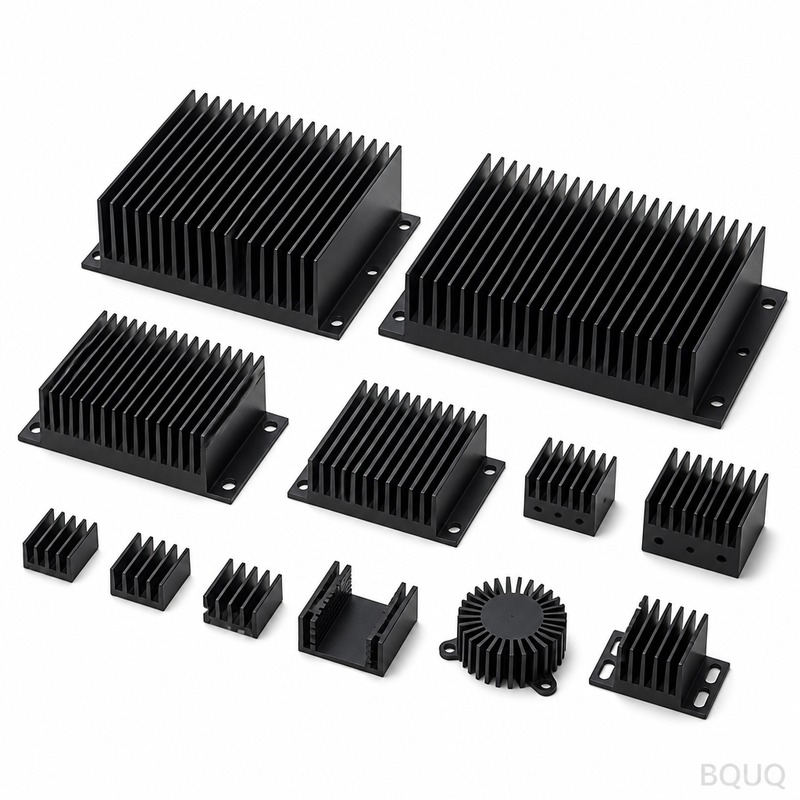
Heat Pipe vs Dissipatore Solido: Il Punto in Cui i Heat Pipe Giustificano il Loro Costo
Un heat pipe giustifica il suo costo quando il problema termico è spostare o diffondere il calore lateralmente, non scaricarlo direttamente verso l'alto: la sorgente di calore copre meno di circa un quarto della base, il calore deve percorrere più di 50–100 mm per raggiungere le alette o un raffreddatore remoto, oppure il flusso d'aria può raggiungere solo alette posizionate lontano dalla sorgente. Se la sorgente è già distribuita sulla base e l'aria passa direttamente sopra di essa, un dissipatore solido in alluminio o rame raffredda altrettanto bene a costo inferiore e con meno giunzioni soggette a guasti.
Gli heat pipe non sono conduttori magici; sono conduttori intelligenti. Spostano il calore tramite cambiamento di fase — il vapore viaggia, condensa, e il liquido ritorna per capillarità — quindi la loro conduttività apparente è enorme lungo l'asse, ma rispettano comunque tutte le altre regole dello scambio termico alle estremità evaporatore e condensatore. Questa guida li confronta con i dissipatori solidi su tre assi fondamentali: prestazioni termiche, costo e affidabilità.
Cosa Cambia Realmente un Heat Pipe
Una base solida in alluminio conduce lateralmente a circa 200 W/m·K; il rame a circa 390 W/m·K. Un heat pipe sposta il calore assialmente con una conduttività effettiva nell'intervallo di 5.000–200.000 W/m·K a seconda di diametro, lunghezza, stoppino e carica — da due a tre ordini di grandezza superiore al rame. Ma quel valore si applica solo lungo l'asse del tubo, e solo fino al limite di trasporto del tubo stesso. Se si supera la potenza consentita dai limiti capillari o di ebollizione, l'evaporatore si secca; il tubo smette di essere un conduttore e diventa un semplice tubo di rame caldo.
| Materiale o dispositivo | Conduttività effettiva (tipica) | A cosa è adatto |
|---|---|---|
| Alluminio solido 6063 | ~200 W/m·K | Diffusione economica su brevi distanze |
| Rame solido | ~390 W/m·K | Diffusione e conduzione, alto costo e massa |
| Heat pipe da 6 mm (assiale) | ~5.000–50.000 W/m·K | Spostare calore a 50–200 mm verso un pacco alettato |
| Heat pipe da 8 mm (assiale) | ~10.000–100.000 W/m·K | Trasporto di potenza maggiore per tubo |
| Vapor chamber (planare) | ~5.000–20.000 W/m·K equivalente | Diffusione su una base piatta ampia |
Conclusione: gli heat pipe e le vapor chamber sono diffusori e trasportatori, non sostituti delle alette. Le alette respingono comunque il calore all'aria con la stessa fisica convettiva; il tubo consente solo di posizionare quelle alette dove l'aria fluisce realmente. Quando non è necessario tale spostamento, il tubo aggiunge costo, giunzioni e modalità di guasto senza aumentare il raffreddamento.
Il Punto di Intersezione nei Prodotti Reali
La decisione è geometrica prima che termica. Immaginate un die CPU di 35 × 35 mm che dissipa 150 W in un ingombro di raffreddamento di 120 mm. Il die copre circa l'8% della base. Una base solida in alluminio abbastanza spessa da diffondere 150 W su 120 mm senza una grande caduta di temperatura sarebbe pesante e comunque lenta; il rame funzionerebbe ma peserebbe e costerebbe più di un assemblaggio con heat pipe. Ora immaginate un resistore di potenza di 50 × 50 mm su una base di 60 × 60 mm — la sorgente copre la maggior parte della base, l'aria raggiunge le alette direttamente sopra, e un'estruso solido è chiaramente la scelta giusta.
| Schema applicativo | Dissipatore solido | Assemblaggio con heat pipe |
|---|---|---|
| Sorgente copre la maggior parte della base, aria raggiunge le alette sopra | Scelta migliore — costo minimo | Nessun beneficio, costo aggiuntivo |
| Die piccolo e caldo, grande area alettata necessaria (classe CPU/GPU) | Spesso, pesante, diffusione lenta | Vincono più heat pipe o vapor chamber |
| Il calore deve percorrere 100 mm+ verso un pacco alettato remoto o una parete del telaio | Impraticabile senza diffusore di calore | Il tubo è la soluzione standard |
| Contenitore sigillato, calore spostato verso una parete fredda | Possibile piastra spessa in rame | Tubo verso staffa a parete, compatto |
| Array LED su scheda lunga e stretta | PCB in rame o diffusore spesso | Tubo lungo la scheda, estremità raffreddata |
Conclusione: il punto di intersezione appare quando l'impronta della sorgente è piccola rispetto all'area di raffreddamento o quando la superficie di raffreddamento è remota. Regola pratica dalla pratica termica: considerare i tubi quando il trasporto laterale richiesto supera circa 50–100 mm o la sorgente è sotto ~25% dell'area della base; considerare una vapor chamber quando il problema è diffondere su una base piatta ampia piuttosto che spostare calore in una direzione.
Costo e Affidabilità: La Parte Che Nessuno Mette nel Brochure
Un dissipatore estruso solido è un unico pezzo di alluminio: nessuna giunzione, nessuno stoppino, nessuna carica, nessun limite di orientamento. Un assemblaggio con heat pipe aggiunge i tubi stessi, una base con scanalature, giunzioni saldate o brasate, e un fornitore che deve controllare l'intero sottoassieme. Confrontate onestamente il profilo di guasto e costo prima di specificare i tubi.
| Fattore | Dissipatore solido in alluminio | Assemblaggio con heat pipe |
|---|---|---|
| Numero di componenti | 1 (più clip) | Base + 2–6 tubi + TIM + clip |
| Giunzioni soggette a guasto | Nessuna | Legame tubo-base, tenuta dei tubi |
| Sensibilità all'orientamento | Nessuna | La gravità riduce le prestazioni; evitare orientamento con evaporatore sopra |
| Comportamento a gelo/surriscaldamento | Nessuno (metallo massivo) | La carica d'acqua può limitare l'intervallo di temperatura max/min |
| Costo tipico | Minimo per pezzo | 1,5–4× un dissipatore solido di ingombro simile |
| "Margine" termico | Fissato dalla geometria | Elevato se i tubi sono sottodimensionati — o secchezza catastrofica |
Conclusione: il prezzo di un assemblaggio con heat pipe non è solo il tubo — è l'onere della qualifica. Ogni orientamento, ogni estremo di temperatura, e ogni transitorio di potenza diventa un caso di test. Per un prodotto che opera in un solo orientamento, un solo livello di potenza e un intervallo ambientale modesto, quell'onere può valere la pena; per un prodotto generico spiega perché molti dissipatori usano comunque i tubi: il rapporto die-area alettata non lascia alternative più economiche alle prestazioni richieste.
Dimensionamento e Acquisto di Assemblaggi con Heat Pipe
Se l'analisi indica i tubi, dimensionateli con un budget per tubo: un tubo da 6 mm trasporta tipicamente circa 30–60 W e uno da 8 mm circa 60–100 W alle differenze di temperatura comuni in elettronica, con il valore esatto determinato da lunghezza, numero di curve e orientamento. Mantenete curve dolci (raggio superiore a ~3× il diametro del tubo), evitate appiattimenti sotto ~70% del diametro originale all'evaporatore, e testate l'orientamento peggiore — un dissipatore che supera i test banco in orizzontale può perdere 5–15% montato verticalmente con l'evaporatore sopra il condensatore. La base che contiene i tubi è spesso un pezzo lavorato con geometria di scanalatura precisa, che è lavoro standard per dissipatori CNC; l'approvvigionamento dei tubi, la saldatura e il controllo della carica di solito appartengono a uno specialista di assemblaggi termici. Quando arriva un disegno con tubi, chiedete al fornitore di dichiarare la specifica del tubo, il metodo di giunzione e i dati di test sull'orientamento — queste tre risposte vi dicono se l'assemblaggio è stato ingegnerizzato o solo assemblato. Per il lato dei dissipatori solidi del confronto, i dissipatori estrusi e le piastre lavorate in rame o alluminio rimangono i cavalli di battaglia, e la guida alluminio vs rame per dissipatori copre quando aggiornare il metallo di base è la mossa più intelligente rispetto all'aggiunta di tubi.
Domande Frequenti
D: Quando un heat pipe è meglio di un dissipatore solido?
R: Quando il calore deve diffondersi da una piccola sorgente su una base ampia o percorrere più di circa 50–100 mm per raggiungere alette o una parete raffreddata. Se la sorgente copre già la maggior parte della base e l'aria raggiunge le alette sopra, un dissipatore solido in alluminio raffredda altrettanto bene a costo inferiore.
D: Quanto calore può trasportare un singolo heat pipe?
R: Come cifra indicativa di dimensionamento, un tubo da 6 mm trasporta circa 30–60 W e uno da 8 mm circa 60–100 W alle differenze di temperatura tipiche dell'elettronica. La capacità esatta dipende da lunghezza, curve, tipo di stoppino, orientamento e temperatura operativa — confermate sempre con i dati del produttore del tubo.
D: I dissipatori con heat pipe sono affidabili a lungo termine?
R: Sì, quando il tubo è entro il suo inviluppo operativo e la giunzione è solida — milioni di laptop e server li usano per anni. I rischi sono il seccaggio per superamento della capacità di trasporto, la perdita di prestazioni in orientamento sfavorevole e una scarsa adesione tubo-base; tutti e tre si individuano con i test.
D: Perché il mio dissipatore con heat pipe è peggiore quando è montato verticalmente?
R: L'orientamento cambia il modo in cui il fluido di lavoro ritorna attraverso lo stoppino. Con l'evaporatore sotto il condensatore, la gravità assiste il ritorno; con l'evaporatore sopra, lo stoppino combatte la gravità e la capacità diminuisce, tipicamente del 5–15% o più. Testate l'orientamento di montaggio reale.
D: Servono alette in rame con gli heat pipe?
R: Di solito no. Il tubo sposta il calore verso il pacco alettato, quindi le alette in alluminio lo respingono all'aria quasi quanto quelle in rame a una frazione del peso e del costo. Le alette in rame giustificano il loro premio principalmente dove il pacco alettato stesso deve anche diffondere calore lateralmente, come in array molto densi.
Articoli Correlati
- aluminum-vs-copper-heat-sinks — Altro dalla serie tecnica BQUQ Thermal Management.
- heat-sink-fin-design-guidelines — Altro dalla serie tecnica BQUQ Thermal Management.
- air-cooling-vs-liquid-cooling-electronics — Altro dalla serie tecnica BQUQ Thermal Management.
Risorse Correlate
- Chi è BQUQ: una fabbrica sorgente certificata ISO9001 a Dongguan con quattro linee di produzione sotto lo stesso tetto.
- Dissipatori e componenti termici: opzioni estrusi, CNC e stampati dalla linea termica — dissipatori estrusi, dissipatori CNC, dissipatori stampati.
- Tendenze di settore: analisi manifatturiera, mercato dei materiali e sourcing per acquirenti.
- Articoli tecnici: guide ingegneristiche e confronti di processo — altro da cui proviene questo articolo.
- Hub FAQ: risposte rapide su CNC, stampaggio, molle e dissipatori.
- Casi studio: componenti reali e numeri reali da progetti che abbiamo ingegnerizzato e consegnato.
- Contattaci: invia il tuo disegno e ricevi un preventivo entro 12 ore lavorative.
Autore: BQUQ Engineering Team. BQUQ è una fabbrica sorgente certificata ISO9001 a Dongguan, Cina, con linee di lavorazione CNC, stampaggio metalli, molle su misura, dissipatori e collet sotto lo stesso tetto. Invia disegni a sc@bquq.com o WhatsApp +86 13713157787 per un preventivo entro 12 ore lavorative. www.bquq.com