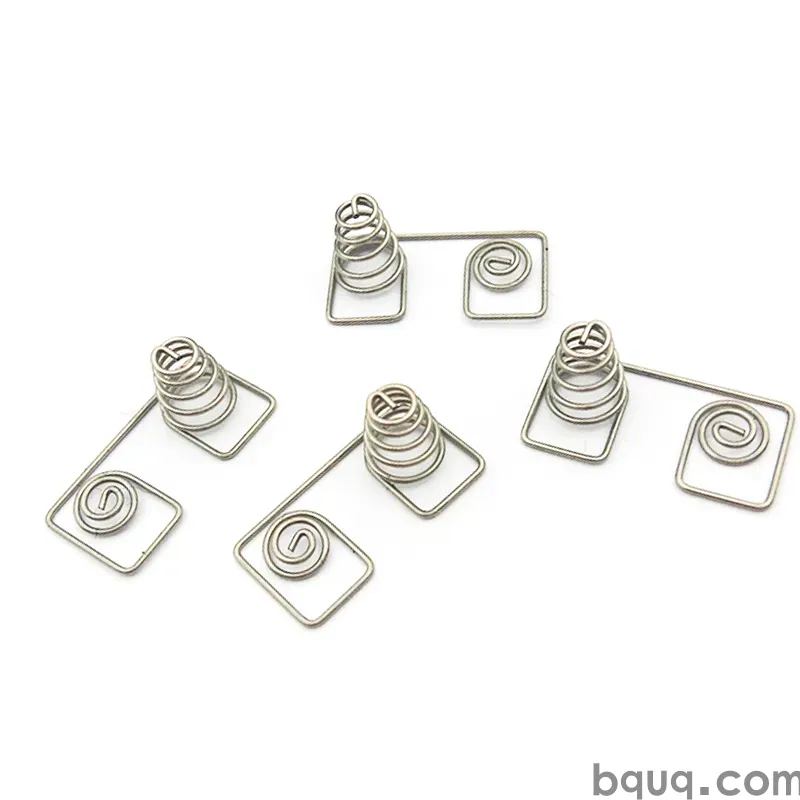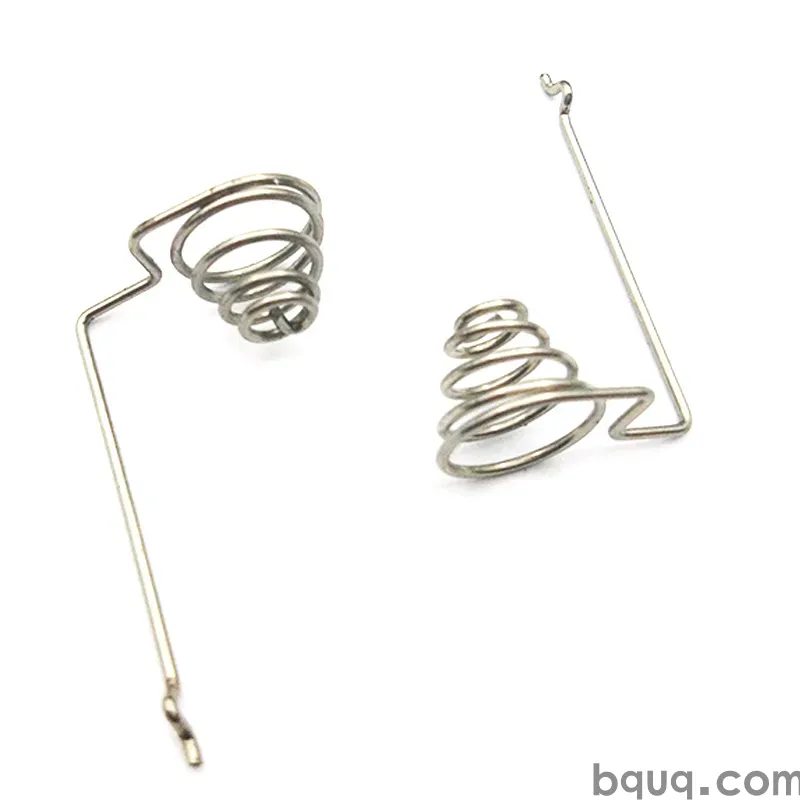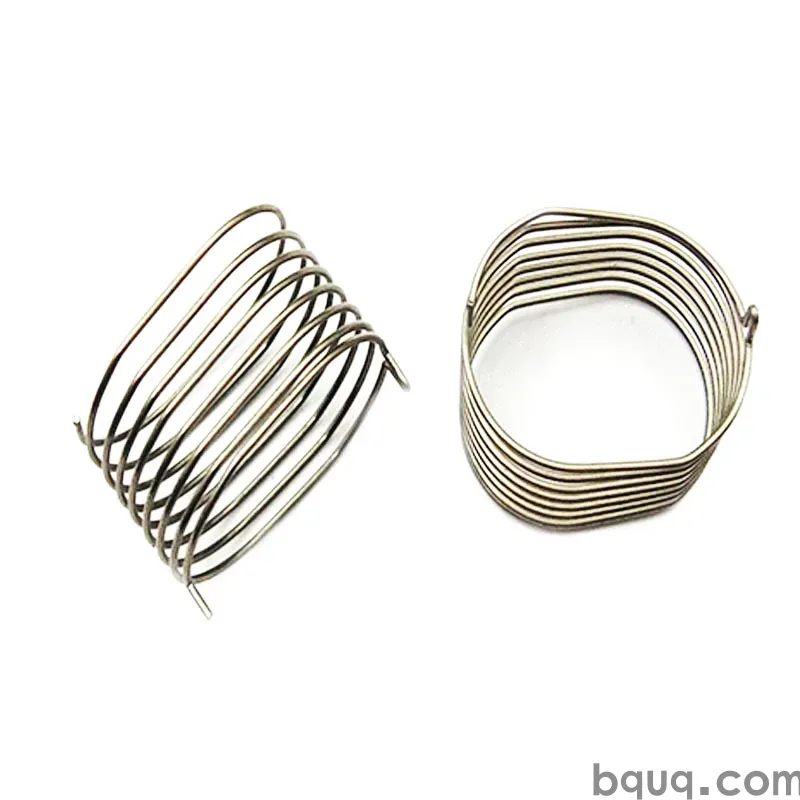
I ganci delle molle a trazione sopportano lo stress più elevato e si rompono per primi. Soluzioni su raggio, carico e design dell‘estremità. BQUQ (ISO9001, Dongguan) produce molle a trazione.
Ganci delle Molle a Trazione: Il Punto di Rottura che la Maggior Parte dei Progetti Ignora
Il gancio di una molla a trazione è il punto più debole del componente: un gancio pieno può sopportare solo circa il 50-60% del carico che le spire del corpo tollererebbero, perché lo stress di flessione al raggio del gancio si combina con la concentrazione di stress, ed è lì che la maggior parte delle molle a trazione si rompe. Se la vostra molla a trazione continua a cedere all'estremità, la soluzione è di solito un raggio di curvatura del gancio più ampio, uno stress di lavoro inferiore al gancio, o un'estremità ridisegnata — non un filo più resistente.
I progettisti dedicano i loro sforzi alle spire — diametro del filo, diametro medio, numero di spire, rigidezza — e trattano il gancio come un ripensamento. Ma le spire sono la parte più resistente di una molla a trazione. Il gancio è una trave piegata che sopporta l'intero carico attraverso un raggio stretto, e cede per primo per fatica, rilassamento e raddrizzamento sotto sovraccarico. Merita più attenzione progettuale del corpo, perché è lì che la molla muore realmente.
Perché i Ganci Cedono Prima del Corpo
Quando un filo viene avvolto a spirale nel corpo della molla, lo stato di stress residuo e la curvatura graduale sono tolleranti. Quando l'estremità viene piegata a 180° o 270° per formare un gancio, si accumulano tre penalità. Primo, la piega è un concentratore di stress: l'interno del raggio del gancio vede uno stress di picco ben superiore al valore nominale. Secondo, il gancio è caricato parzialmente a flessione — e lo stress di flessione su un filo è più alto dello stress torsionale che il corpo sopporta per lo stesso carico. Terzo, il gancio formato ha una superficie incrudita e potenzialmente micro-fessurata, esattamente dove si trova lo stress più alto. Il risultato è una parte la cui estremità è la sezione limitante, non il corpo.
| Forma del gancio | Capacità di carico tipica vs corpo | Note |
|---|---|---|
| Gancio pieno tondo (180°) | 50-70% del corpo | Più comune; il raggio di curvatura determina la durata |
| Mezzo gancio / gancio corto | 50-65% | Costo inferiore, meno spazio |
| Gancio incrociato (occhiello tedesco) | 40-60% | Connessione più rigida, piega più stretta |
| Gancio laterale (esteso) | 40-60% | Pieghe in un secondo piano, stress peggiore |
| Estremità con tappo rivettato / filettato | 70-90% | Elimina completamente lo stress di flessione |
Valori tipici del settore per carico statico; le percentuali diminuiscono ulteriormente sotto fatica. Concetto chiave: se il corpo della molla è dimensionato per il carico, il gancio è già l'anello debole — quindi il corpo dovrebbe essere dimensionato in base alla capacità del gancio, o il gancio dovrebbe essere ridisegnato. La connessione d'estremità più resistente non è affatto un gancio: un tappo, un rivetto o un inserto filettato elimina la piega netta e permette alla molla di utilizzare quasi tutta la sua resistenza del corpo, al costo di una fase di assemblaggio.
Stress al Gancio: Il Raggio è la Leva Progettuale
Lo stress del gancio scala inversamente con il raggio di curvatura — più stretto è il raggio, maggiore è la concentrazione di stress. Il raggio di curvatura minimo pratico è legato al diametro del filo: un gancio piegato con un raggio interno di un diametro del filo concentra molto più stress di uno piegato a tre diametri. I progettisti che specificano un gancio "il più stretto possibile" per risparmiare spazio stanno progettando la cricca.
| Raggio di curvatura interno del gancio | Concentrazione di stress relativa | Comportamento a fatica |
|---|---|---|
| 0,5 × diametro del filo | Massima — da evitare | Cricche precoci alla piega |
| 1,0 × diametro del filo | Alta | Durata breve sotto ciclaggio |
| 2,0 × diametro del filo | Moderata | Accettabile per molte applicazioni |
| 3,0+ × diametro del filo | Bassa | Durata lunga, più spazio necessario |
| Tappo / estremità meccanica | Nessuno stress di flessione | Migliore fatica, costo di assemblaggio |
Concetto chiave: date al gancio il raggio di curvatura più ampio che lo spazio consente e ricordate la direzione del carico. Un gancio caricato in modo che la piega tenda ad aprirsi (raddrizzando il raggio) si comporta diversamente da uno caricato per chiudersi; i carichi di apertura concentrano lo stress all'interno del raggio dove il filo è stato maggiormente lavorato. Se lo spazio impone un gancio stretto, aspettatevi che sia la parte che limita la durata e pianificate la sostituzione o un'estremità meccanica.
Le Tre Modalità di Rottura dei Ganci — e la Soluzione per Ciascuna
I ganci si rompono in tre modi, e ciascuno ha un rimedio diverso. L'apertura o il raddrizzamento del gancio sotto sovraccarico significa che lo stress di lavoro ha superato lo snervamento del materiale alla piega — riducete il carico, aumentate il raggio o passate a un materiale più resistente. La cricca da fatica alla piega, dopo molti cicli, significa concentrazione di stress più ciclaggio — aumentate il raggio, riducete l'ampiezza e considerate la pallinatura o la lucidatura della piega. Il rilassamento e l'assestamento al gancio, dove il gancio si apre lentamente anche a carico costante — comune nelle molle caricate a caldo o a lungo termine — significa ridurre lo stress, aggiungere il presetting o migliorare il materiale.
| Sintomo di rottura | Causa probabile | Prima soluzione da provare |
|---|---|---|
| Il gancio si apre permanentemente sotto carico | Stress di flessione oltre lo snervamento | Raggio di curvatura più ampio o materiale più resistente |
| Cricca alla piega dopo molti cicli | Concentrazione di stress + fatica | Raggio più grande, pallinatura della zona del gancio, carico inferiore |
| Il gancio si apre gradualmente nel tempo | Rilassamento ad alto stress/temperatura | Ridurre lo stress, presetting, lega migliore |
| Rottura all'incrocio o all'inizio della spira | Transizione netta nella formatura | Formatura più dolce, distensione dopo l'avvolgimento |
| Rottura all'interno del corpo, non al gancio | Il carico supera la capacità del corpo | Filo più grande o carico inferiore — il corpo era il limite |
Concetto chiave: quando una molla restituita rotta mostra un gancio spezzato, osservate la posizione della frattura prima di cambiare materiale. Una cricca all'interno del raggio di curvatura è un problema geometrico; un gancio raddrizzato è un problema di stress; una rottura alla transizione spira-gancio è un problema di formatura. Ogni soluzione è diversa, e cambiare il grado di acciaio non risolve in modo affidabile nessuna di esse.
Progettare Prima l'Estremità
La sequenza progettuale pratica è progettare prima la connessione d'estremità, poi dimensionare il corpo su di essa. Iniziate decidendo come si attacca la molla: su un perno, in un foro, attorno a un prigioniero o a un assemblaggio filettato. Questa decisione determina la forma del gancio e lo spazio disponibile per il raggio di curvatura. Poi calcolate lo stress del gancio al carico massimo — se supera la capacità del materiale, la risposta non è un filo più grande (che aiuta a malapena una concentrazione di stress) ma un raggio più grande, una forma più dolce o un'estremità meccanica. Solo allora dimensionate le spire del corpo per la rigidezza e la corsa, e verificate che la capacità del corpo sia compatibile con il limite inferiore del gancio.
Quando un disegno richiede più di quanto la geometria consenta al gancio, la risposta ingegneristica onesta è cambiare l'estremità: molle a trazione con estremità a tappo o ad occhiello, o un passaggio a una configurazione a torsione o compressione che carichi il filo nella sua direzione resistente. I ganci caricati a flessione avranno sempre prestazioni inferiori alle spire caricate a torsione — questa è fisica, non abilità artigianale. Una fabbrica di molle che segnala un gancio debole sul vostro disegno prima della quotazione sta facendo lavoro di progettazione, non solo avvolgendo filo.
BQUQ progetta e produce molle a trazione sotto ISO9001 a Dongguan, inclusa la connessione d'estremità: ganci, occhielli incrociati ed estremità meccaniche, formati con raggi di curvatura controllati e distesi dopo la formatura, con test di carico su lotti. Inviate il disegno con il dettaglio dell'attacco d'estremità e il numero di cicli a sc@bquq.com o WhatsApp +86 13713157787 per un preventivo entro 12 ore lavorative — e se la geometria del gancio è al limite, lo diremo prima che tagliate gli stampi.
D: Perché ogni molla a trazione che provo si rompe al gancio?
Perché il gancio è la sezione a stress più alto: stress di flessione più concentrazione di stress a un raggio stretto, su un filo che è stato pesantemente lavorato durante la formatura. Le spire del corpo sono comparativamente meno stressate. Ridisegnate il raggio del gancio o la connessione d'estremità piuttosto che aumentare il diametro del filo.
D: Qual è il raggio di curvatura minimo per un gancio di molla a trazione?
Come minimo pratico, evitate raggi interni inferiori a un diametro del filo; da due a tre diametri dà un grande miglioramento della durata. Ogni millimetro di spazio che potete dare al raggio del gancio compra una durata a fatica sproporzionatamente maggiore.
D: Le rotture del gancio significano che il materiale della molla è difettoso?
Di solito no. Una cricca all'interno della piega è una firma di geometria e concentrazione di stress, non un difetto del materiale. I cambi di grado del materiale raramente risolvono le rotture del gancio — raggio, carico e design dell'estremità lo fanno. Controllate la posizione della frattura prima di incolpare l'acciaio.
D: Come posso far durare più a lungo un gancio di molla a trazione sotto ciclaggio?
Ingrandite il raggio di curvatura, riducete lo stress di lavoro al gancio, aggiungete pallinatura o lucidatura alla piega e distendete dopo la formatura. Se il ciclaggio è severo, passate a un'estremità a tappo o rivettata che elimina completamente lo stress di flessione.
D: Quando dovrei evitare del tutto i ganci?
Quando la molla vede cicli elevati, carico elevato o vive in un ambiente caldo o corrosivo — le tre cose che i ganci tollerano peggio. Usate un'estremità meccanica (tappo, inserto filettato, raccordo rivettato) o ridisegnate a una molla di compressione caricata attraverso estremità piatte.
Autore: BQUQ Engineering Team. BQUQ è una fabbrica sorgente certificata ISO9001 a Dongguan, Cina, che gestisce linee di lavorazione CNC, stampaggio metalli, molle personalizzate, dissipatori di calore e pinze sotto lo stesso tetto. Inviate i disegni a sc@bquq.com o WhatsApp +86 13713157787 per un preventivo entro 12 ore lavorative. www.bquq.com